AI Agents Enterprise Transformation 2026
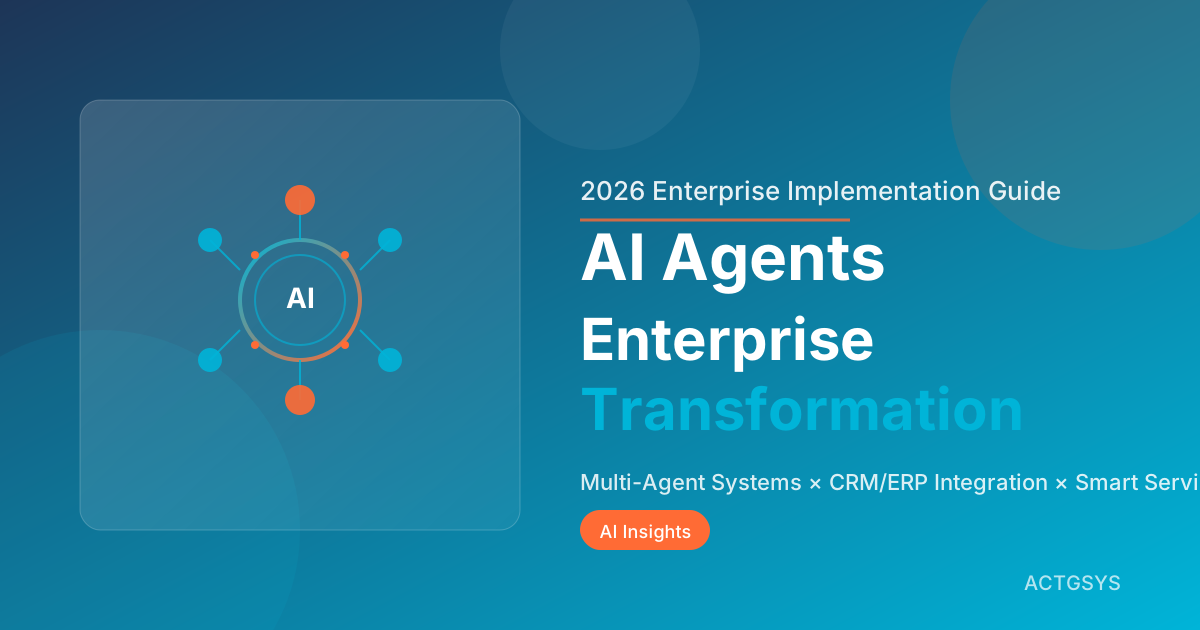
If 2025 was the year everyone talked about AI Agents, 2026 is the year they move into production. According to Gartner, 40% of enterprise applications will embed AI Agents by the end of 2026, up from less than 5% in 2025. This article provides a comprehensive analysis of how AI Agents are transforming enterprise operations and how SMEs can leverage this transformation wave.
What Are AI Agents? How Do They Differ from Traditional AI?
AI Agents are intelligent systems capable of autonomously perceiving their environment, making decisions, and executing tasks. Unlike traditional chatbots or rule-based automation, AI Agents possess these characteristics:
- Autonomy: Can independently complete multi-step tasks without step-by-step human guidance
- Environmental Perception: Integrate multiple data sources to understand business context
- Continuous Learning: Learn from interactions to improve decision quality
- Tool Utilization: Can use APIs, databases, and other external tools to complete tasks
AI Agents vs Traditional Automation
| Feature | Traditional RPA/Automation | AI Agents |
|---|---|---|
| Task Processing | Fixed rule-based workflows | Flexible decision-making |
| Exception Handling | Requires human intervention | Autonomous judgment |
| Learning Capability | None | Continuous optimization |
| Integration Depth | Surface-level operations | Deep system integration |
| Use Cases | High repetition, low variance | Complex, dynamic scenarios |
Seven Key AI Agent Trends for 2026
1. Rise of Multi-Agent Systems
Single AI Agents are being replaced by collaborative multi-agent systems. Gartner reports that multi-agent system inquiries surged 1,445% from Q1 2024 to Q2 2025. This architecture resembles microservices, where specialized Agents handle specific domains and communicate through coordination layers.
Practical Applications:
- Customer Service Agent handles frontline inquiries
- Sales Agent identifies purchase intent
- Analytics Agent generates insight reports
- Scheduling Agent coordinates follow-ups
2. Deep CRM/ERP Integration
AI Agents are no longer standalone tools but integrate deeply with existing enterprise systems through APIs, webhooks, and middleware. IDC predicts that by 2026, nearly half of CRM-related investments will go toward data architecture, AI infrastructure, and analytics capabilities rather than additional software licenses.
3. AI Redefines Customer Service Tiers
AI will become the frontline agent for handling high-volume, low-complexity issues. Traditional Tier 1 customer service will transition to:
- Training and supervising AI policies
- Handling exceptions
- Monitoring service safety
Tier 2 and Tier 3 become the centers of human expertise.
4. Hyper-Personalized "Concierge-Style" Service
The era of scripted chatbots and reactive customer service is ending. In 2026, Agents will establish hyper-personalized service standards, providing customized experiences based on customer history, preferences, and current context.
5. Agent-to-Agent Semantic Communication Layer
The true innovation for 2026 is the semantic layer enabling agent-to-agent communication across organizational boundaries—a shared vocabulary allowing Agents from different organizations to understand intent, verify trust, and negotiate terms.
6. Shift from Adoption to Execution
Statistics show 78% of organizations are already using AI in some form, and 85% have adopted Agents in at least one workflow. The challenge in 2026 shifts from "whether to adopt" to "how to execute effectively," with enterprises facing data readiness, platform scalability, and human-AI collaboration issues.
7. AI-Ready Workforce Development
The biggest challenge isn't technology—it's people. In 2026, organizations will shift from "buying AI" to "building an AI-ready workforce." 85% of executives expect employees to rely on AI Agent recommendations for real-time, data-driven decisions.
How Can SMEs Implement AI Agents?
Step 1: Identify High-Value Use Cases
According to market research, workflow automation is the primary application for 64% of Agent deployments, particularly in customer service, HR, and sales operations. Consider starting with:
- Customer Service: Auto-reply to common questions, intelligent routing
- Sales Support: Lead scoring, follow-up reminders
- Document Processing: Invoice recognition, contract analysis
- Data Integration: Cross-system data synchronization and reporting
Step 2: Assess Data Readiness
AI Agent performance depends on data quality. Before implementation, enterprises should:
- Inventory existing data sources
- Establish data governance standards
- Plan data cleaning and standardization processes
- Evaluate system integration feasibility
Step 3: Choose the Right Implementation Strategy
| Strategy | Characteristics | Best For |
|---|---|---|
| SaaS Solution | Quick deployment, low initial investment | Small businesses, first-time adoption |
| Platform Integration | Deep integration with existing systems | Mid-sized businesses with digital foundation |
| Custom Development | Fully meets business requirements | Unique processes, competitive advantage needs |
Step 4: Establish Human-AI Collaboration Mechanisms
AI Agents don't replace employees—they enhance team capabilities. Successful implementations establish:
- Clear AI usage policies
- Human review and exception handling processes
- Continuous feedback and optimization mechanisms
- Employee training and capability development programs
Real Case Study: Retail AI Agent Application
A retail chain brand achieved these results after implementing AI Agents:
- Customer response time reduced from 5 minutes to 1.5 minutes
- Inventory accuracy improved from 85% to 98%
- Sales conversion rate increased by 23%
- Staff can focus on high-value customer interactions
Common Implementation Challenges and Solutions
Challenge 1: Employee Resistance to Change
Solution: Emphasize AI as a collaboration tool, not a replacement. Provide adequate training and involve employees in the implementation process.
Challenge 2: Insufficient Data Quality
Solution: Conduct data cleaning projects first, establish data quality monitoring mechanisms, and adopt a gradual implementation strategy.
Challenge 3: High Integration Complexity
Solution: Choose platforms with rich APIs, consider hiring professional consultants, and adopt phased integration plans.
Challenge 4: Difficult ROI Measurement
Solution: Set clear KPIs, establish baseline data, regularly track benefits, and adjust optimization strategies.
FAQ
Q1: What's the difference between AI Agents and RPA?
RPA follows fixed rules for repetitive tasks and cannot handle exceptions. AI Agents have understanding, reasoning, and learning capabilities, can handle complex and dynamic scenarios, and make autonomous decisions.
Q2: How much budget does AI Agent implementation require?
It depends on enterprise size and application scope. SaaS solutions start from approximately NT$10,000-50,000 per month, while customized solutions require needs assessment. We recommend starting with small-scale pilots to validate benefits before expanding investment.
Q3: My enterprise doesn't have much data—is AI Agent implementation suitable?
Data volume isn't the only consideration. Even with smaller data volumes, AI Agents can create value through process automation and intelligent decision support. The key is identifying real business pain points.
Q4: Will AI Agents replace my employees?
Research shows AI is better at augmenting rather than replacing human capabilities. AI Agents handle repetitive work, allowing employees to focus on tasks requiring creativity, empathy, and complex judgment. The 2026 trend is human-AI collaboration, not human-AI conflict.
Q5: How can I ensure AI Agent decision quality?
We recommend adopting "Human-in-the-loop" mechanisms, retaining human review at critical decision points. Also regularly review AI decision results and continuously optimize models and rules.
Conclusion: Seize the AI Agent Transformation Opportunity
2026 will be the pivotal year for AI Agents moving from concept to implementation. For SMEs, this represents both challenge and opportunity—early adopters will gain significant advantages in efficiency, customer experience, and competitiveness.
ACTGSYS has extensive AI system development experience, providing complete AI Agent implementation services from requirements analysis, system design, to deployment and operations. Whether you're exploring AI applications for the first time or looking to deepen the intelligence of existing systems, we can help you find the most suitable solution.
Schedule a free consultation now and start your AI Agent transformation journey!
Products & Solutions in This Article
AI-powered CRM for lead management, customer tracking, and sales pipeline optimization designed for SMEs.
AI-driven ERP focusing on procurement, inventory, and supply chain management. Each customer deployed on dedicated cloud infrastructure.
Related Articles
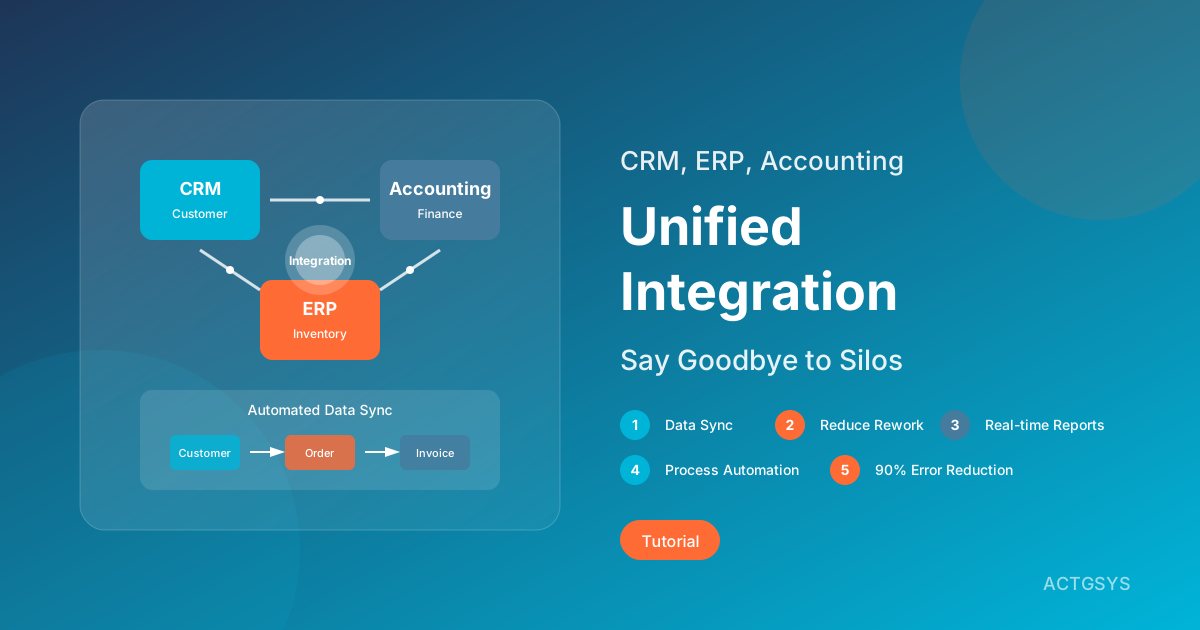
How to Integrate CRM, ERP, and Accounting Systems
In-depth analysis of integration strategies for CRM, ERP, and accounting systems. Understand the pain points of information silos, compare integration methods (API, middleware, native integration), and learn how to achieve data synchronization and process automation.
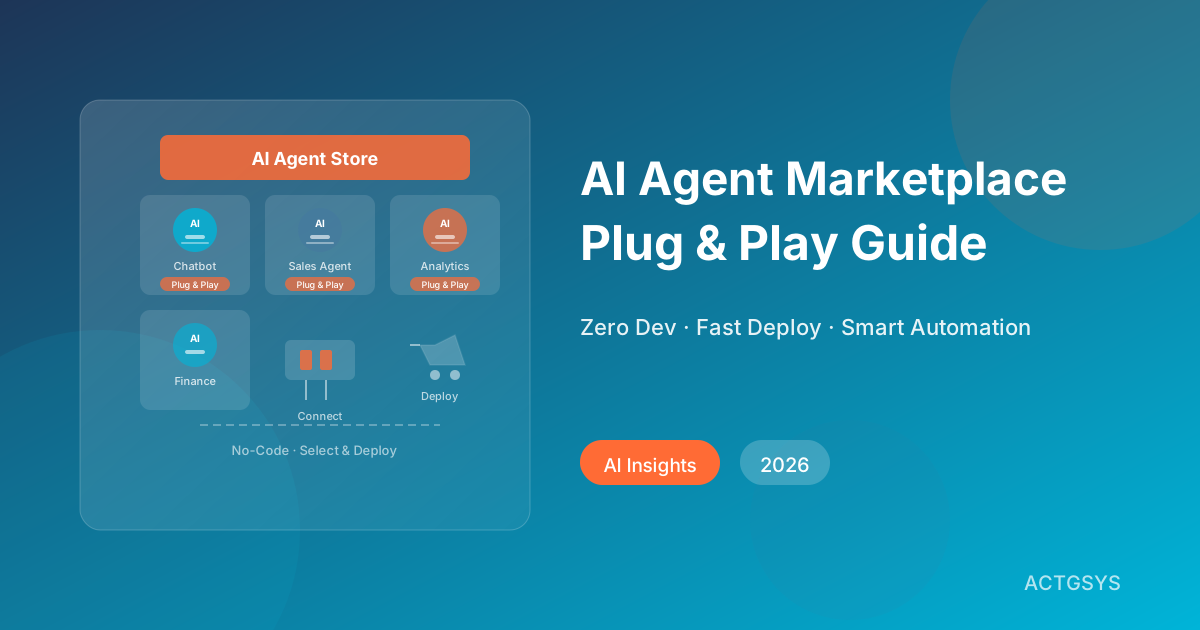
AI Agent Marketplaces: No-Code AI for SMEs (2026)
A comprehensive breakdown of how AI Agent marketplaces let small and medium businesses deploy intelligent automation without custom development — featuring platform comparisons, a buyer's guide, and 3 real-world success stories.
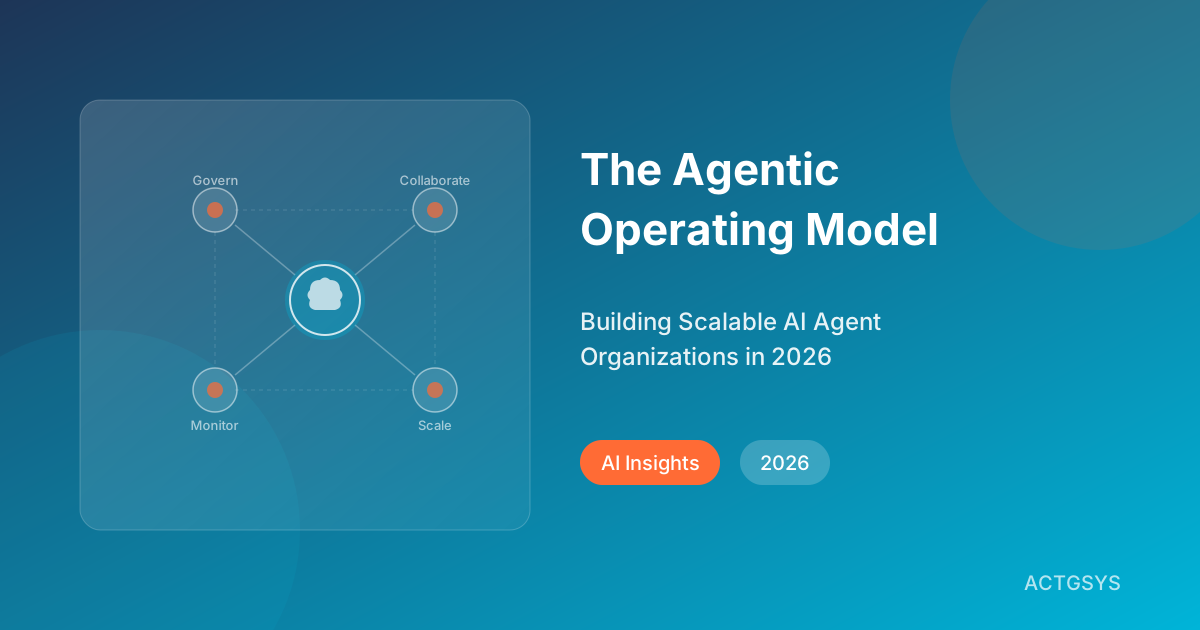
The Agentic Operating Model: Scaling AI Agents 2026
A comprehensive guide to the Agentic Operating Model — learn how enterprises can transition from AI agent pilots to scaled production, solving agent sprawl and ROI challenges.
What would this cost you?
Answer five questions. Within three working days you get a price range and what it covers. No deck, no follow-up sales calls.
Prefer to talk?LINE·02-2553-8084