AI Cross-Border Ecommerce Playbook for SMEs (2026)
TL;DR
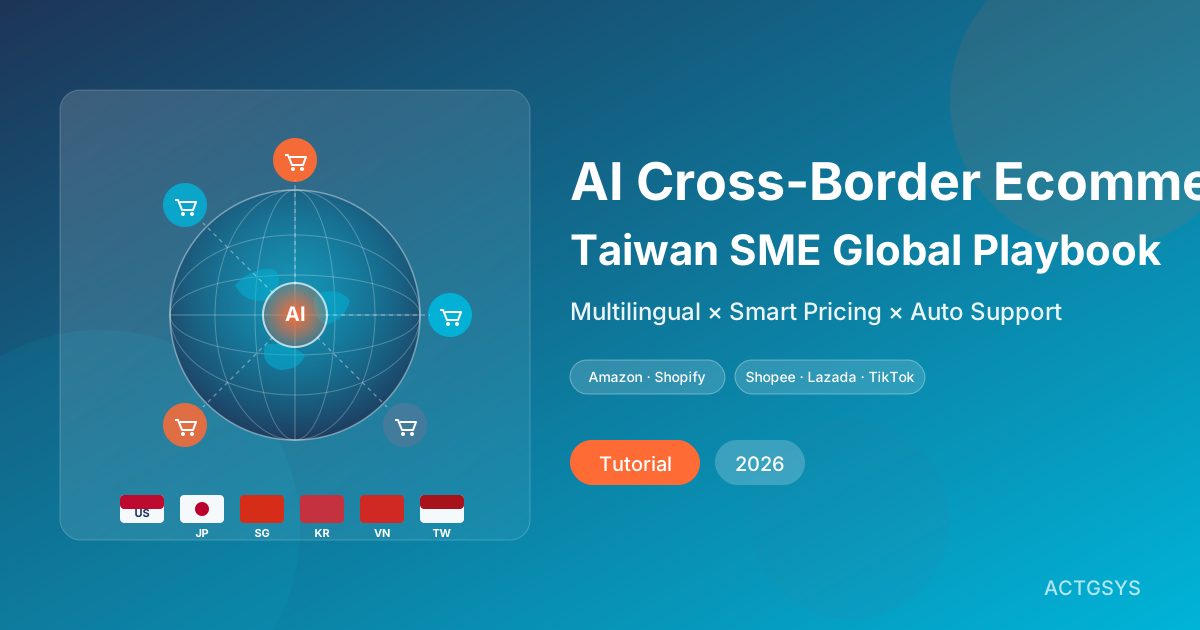
In 2026, cross-border ecommerce has shifted from stacking headcount to stacking AI capability. Taiwan SMEs can use AI across multilingual listing, customer service, dynamic pricing, ad ops, and logistics forecasting — turning what used to require an 8-person team into a lean 2-3 person operation augmented by AI agents. This guide covers the seven-step rollout and a platform × tool comparison.
Why 2026 Is a Pivotal Year for Taiwan SME Cross-Border Ecommerce
2026 is pivotal because three curves are intersecting at once: AI tool maturity, marketplace policy changes, and cross-border consumer behavior. McKinsey's State of Consumer 2025 reports that 38% of global consumers made a cross-border purchase in the past 12 months, with Asia Pacific growing fastest — a demand window Taiwan SMEs cannot afford to miss.
BCG's 2025 Retail Industry report shows that retailers deploying generative AI cut operating costs by 15-25% on average, and Gartner predicts that by end of 2026, 80% of ecommerce brands will use AI for content generation and customer service automation. IDC Retail Insights estimates global ecommerce will exceed USD 7.4 trillion in 2026.
For Taiwan SMEs specifically, 2026 is shaped by policy support: the Bureau of Foreign Trade (BOFT, 經濟部國際貿易署) extended its cross-border ecommerce coaching program; TAITRA (外貿協會) drives matchmaking via Taiwantrade; and the Market Intelligence & Consulting Institute (資策會 MIC) continues to publish cross-border industry research with benchmark cases.
The capability gap is widening fast. Stanford HAI's 2025 AI Index shows small ecommerce operators using AI tools are 40% more productive on average. Reddit's r/AmazonSeller and r/shopify communities are loud on this: skipping AI in 2026 means losing on cost and speed to competitors who already adopted it.
How AI Reshapes Six Core Cross-Border Ecommerce Operations
AI reshapes six core operations: product listing, content generation, customer service, dynamic pricing, ad operations, and logistics forecasting. Each has mature Tier 1 AI tools available, so Taiwan SMEs do not need to build from scratch — they combine platform-native AI with third-party AI agents.
1. Multilingual Listing Automation
Listing one SKU into Japan, the US, and three Southeast Asian markets used to require copywriters, translators, compliance reviewers, and SKU mappers. Today, Anthropic Claude or OpenAI ChatGPT combined with Shopify Magic can take a single source draft and generate variants compliant with Amazon A+ Content, Shopify SEO, and Shopee title rules.
Amazon's 2024 launch of COSMO (Common Sense Knowledge Graph) and Rufus AI shopping assistant prioritizes structured, semantically complete descriptions. High-quality AI-rewritten listings now rank meaningfully better on Amazon search, meaning machine-translation-only listings no longer cut it.
2. Content Generation and SEO
Product imagery and copy is the cross-border "shelf." Google Cloud Vertex AI, Anthropic Claude, and Shopify Magic generate locale-aware descriptions, blog posts, and social copy based on keywords, market culture, and seasonal hooks. HBR's 2025 research finds AI-generated content with human editing converts 22% better than human-only content.
3. Intelligent Customer Service
Time-zone and language coverage is the most painful cost for SMEs. Crisp and Gorgias now embed GPT-4 and Claude models for English, Japanese, Korean, and Southeast Asian replies, with native Shopify and Amazon order context. Taiwan operators can pair DanLee CRM with LINE Official Account so AI agents handle returns, shipping inquiries, and product questions 24/7.
4. Dynamic Pricing and Market Monitoring
Amazon AWS Personalize and Bedrock, Microsoft Azure AI, Helium 10, and Jungle Scout all offer competitor monitoring and dynamic pricing. AI adjusts prices daily based on inventory, competition, FX rates, and ad cost. MIT Sloan's 2024 study found SMEs using AI dynamic pricing improved gross margin by 8-12% on average.
5. Ad Ops and Retargeting
Klaviyo AI, Meta Advantage+, and Google Performance Max are AI-native ad systems. Taiwan SMEs can hand one budget to AI for cross-market, cross-audience, cross-creative allocation. The unlock is data loop closure: feeding Shopify, Amazon, and Shopee orders back to the ad AI so it keeps getting sharper.
6. Logistics and Inventory Forecasting
The biggest hidden cost in cross-border is stockouts and overstocks. Google Cloud Retail AI and Amazon Forecast project demand 4-12 weeks ahead using history, holidays, and ad calendars. Taiwan operators feeding those forecasts into Dinkoko ERP have cut stockouts and dead stock by more than 20% simultaneously.
The Must-Have AI Tool Stack for Cross-Border Ecommerce
The cross-border AI stack has five layers: foundation models, platform-native AI, ops automation, data and ads, and ERP/CRM integration. SMEs do not need to build all five — the win is picking the right combination and wiring the data so AI sees the full operational context.
Foundation model layer: Anthropic Claude (long-form copy, contracts, brand voice), OpenAI ChatGPT / GPT-4o (creative, multimodal), Google Gemini (great with Google Ads and Workspace). Taiwan SMEs should keep at least two vendors to avoid lock-in.
Platform-native AI: Shopify Magic (descriptions, email, blog), Amazon Rufus / COSMO (ranking and recommendations), TikTok Shop Smart+ (ads), Shopee SIP (cross-border listings), Lazada LazAds AI. This layer is typically included in platform fees — use it to the max first.
Ops automation: Helium 10 (Amazon selection and listing optimization), Jungle Scout (market research), Crisp and Gorgias (AI customer service), Klaviyo AI (email marketing). Monthly cost USD 50-300 — cheaper than headcount.
Data and ads: Google Cloud Vertex AI (custom models), Amazon AWS Bedrock + Personalize, Microsoft Azure AI Foundry (enterprise). Suitable for operators above NT$ 3M monthly revenue who need custom recommendation logic.
ERP / CRM integration: DanLee CRM, Dinkoko ERP, Tanjee inventory and quotation — the unified store of orders, stock, and customer data without which AI agents cannot act across systems. This is the integration layer ACTGSYS builds for Taiwan SMEs.
Seven-Step Implementation Guide for SMEs
SMEs should take a phased seven-step path: audit before platform, data before tools, small scope before scale. Avoid the common failure mode of buying ten SaaS subscriptions at once with no data plumbing and no operator who actually uses them. The steps below can deliver an MVP in 60-90 days.
- Audit products and target markets — use TAITRA Taiwantrade, Google Trends, and Helium 10 to validate target countries and keyword demand. Pick 1-2 launch markets (e.g., Japan, US) instead of spreading thin.
- Pick 1-2 primary platforms — based on margin, competition, and logistics, choose among Amazon, Shopify, Shopee, Lazada, TikTok Shop. Under NT$ 1M monthly revenue, Shopify plus one marketplace is usually right.
- Stand up a data hub — use Dinkoko ERP or equivalent to unify product, inventory, and order data. The data hub is the AI agent's "eyes"; without it everything downstream is half-blind.
- Activate platform-native AI — push Shopify Magic, Amazon Listing AI, Lazada LazAds AI to the limit since these are free or already paid for, and you cut headcount immediately.
- Layer cross-platform AI — prioritize AI customer service (Crisp / Gorgias), email marketing (Klaviyo), and product research (Helium 10). Keep monthly SaaS spend within NT$ 5,000-30,000.
- Set KPIs and a feedback loop — track gross margin, repeat rate, customer service response time, and stockout rate weekly. If AI is not moving the metric, change the prompt or swap the tool.
- Expand to platforms three and four — only after the MVP hits 90 days and meets KPI targets. At this stage, consider custom recommendations on Vertex AI or AWS Bedrock.
Platform + AI Tool Pairing Comparison Table
Platform-native AI capability and the right Taiwan SME profile differ dramatically. The table below summarizes the five major cross-border platforms in 2026 — native AI, best-fit categories, entry barrier, and recommended companion AI tools — so operators can allocate resources quickly.
| Platform | Native AI | Best Categories | Entry Barrier | Recommended AI Tools |
|---|---|---|---|---|
| Amazon | Rufus shopping assistant, COSMO knowledge graph, A+ Content gen | Standardized goods (electronics, home, health) | High (FBA, brand registry) | Helium 10, Jungle Scout, Claude, AWS Bedrock |
| Shopify | Shopify Magic, Sidekick AI shopkeeper, Shop App AI | Own-brand, subscription, DTC | Low (live in a week) | Klaviyo AI, Gorgias, Claude, Shopify Inbox AI |
| Shopee | Shopee SIP cross-border listing, SLogistics AI, smart ads | SEA fast-moving, women's apparel, home | Low (Chinese console) | DanLee CRM, Crisp multilingual support, ChatGPT localization |
| Lazada | LazAds AI, Lazzie chatbot, smart pricing | SEA mid-to-premium, brand-led | Medium (regional account) | Helium 10 alternatives, Gemini localization, Vertex AI |
| TikTok Shop | Smart+ ads, creator matching AI, live translation | Impulse buys, beauty, trending items | Medium (needs content team) | Klaviyo, ChatGPT short-video scripts, CapCut AI |
Decision logic: targeting Europe / North America → Amazon + Shopify; targeting SEA → Shopee + Lazada + TikTok Shop; brand-led → Shopify primary with marketplaces as feeders. The 2025 MIC cross-border ecommerce report also recommends Taiwan operators "go deep in 1-2 markets before expanding sideways."
FAQs
Q1: As a Taiwan SME with zero cross-border experience, which platform should I start with? Start with Shopify — fastest to launch, most complete AI tooling, and full brand ownership. If you have existing inventory and want to test quickly, list on Shopee cross-border in parallel (Chinese console, large SEA traffic). Validate the product for 60 days before committing to Amazon.
Q2: Is AI translation quality good enough, or do I still need local translators? In 2026, Claude, GPT-4o, and Gemini deliver commercially usable quality, but the right model is "AI translation + local translator QA." Use AI for standard product descriptions; for brand storytelling and regulated content (cosmetics, food, supplements), keep a human translator in the loop.
Q3: How much should an SME budget for AI-powered cross-border ops? Three tiers for Taiwan SMEs: starter (monthly revenue < NT$ 1M) NT$ 5,000-15,000/mo SaaS; growth (NT$ 1-5M) NT$ 30,000-80,000/mo; scale (> NT$ 5M) NT$ 100,000+ plus custom AI agents. Implementation consulting is separate.
Q4: Will AI dynamic pricing just keep grinding my margin down? No, if you set a minimum margin floor. Every mainstream AI pricing tool supports floor price and target margin — AI only optimizes within the band. MIT Sloan research shows correctly configured AI pricing improves margin by 8-12%, not the opposite.
Q5: Can AI help when cross-border logistics get stuck? Yes. AI demand forecasting (Google Cloud Retail AI, Amazon Forecast) projects market-level demand 4-12 weeks out; paired with Dinkoko ERP to allocate stock across FBA, overseas warehouses, and bonded warehouses, you cut stockouts and dead stock at the same time. Taiwan's BOFT also offers cross-border logistics subsidies.
ACTGSYS provides end-to-end AI cross-border ecommerce consulting and systems integration for Taiwan SMEs — DanLee CRM multilingual support, Dinkoko ERP inventory forecasting, Tanjee quotation, and custom Claude / GPT / Vertex AI integration. If you're planning your 2026 cross-border strategy, reach out to us for a free AI cross-border readiness assessment.
Products & Solutions in This Article
AI-powered CRM for lead management, customer tracking, and sales pipeline optimization designed for SMEs.
AI-driven ERP focusing on procurement, inventory, and supply chain management. Each customer deployed on dedicated cloud infrastructure.
Intuitive accounting system designed for Taiwan SMEs, with automated bookkeeping and financial reporting.
Related Articles
SME Process Reengineering for AI Automation (2026)
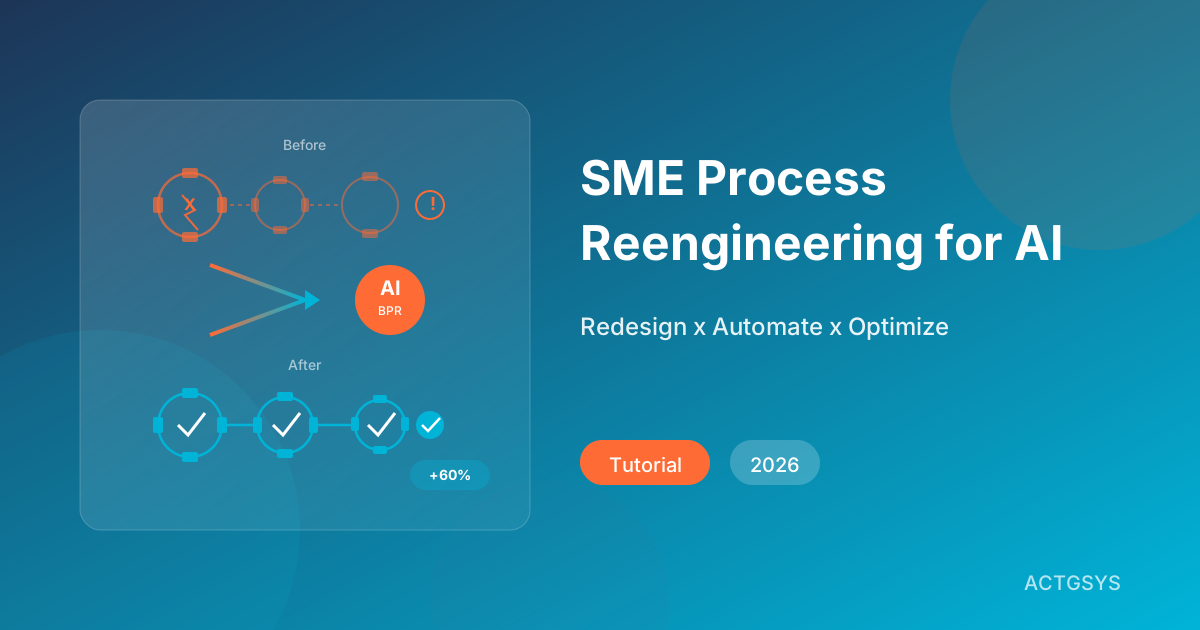
Why do most AI automation projects fail? This guide reveals that Business Process Reengineering (BPR) is the key to success, with a complete framework for SMEs.
No-Code AI Workflow Automation for SMEs
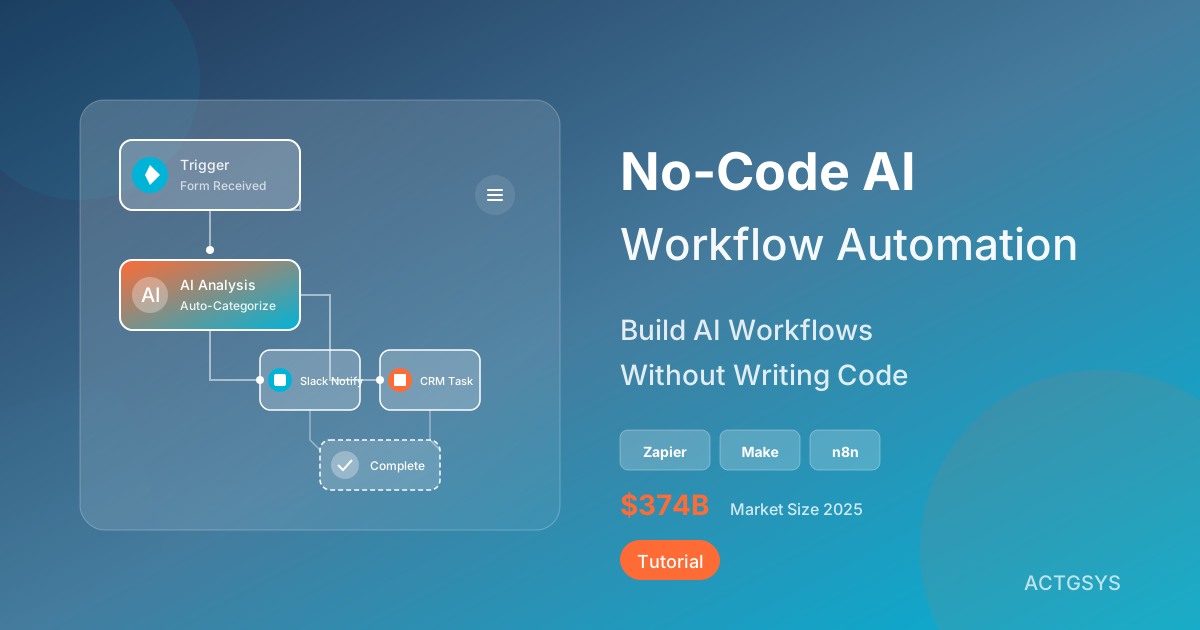
Explore the hottest No-Code AI automation tools of 2025, including Zapier AI, Make, and n8n. Learn how to build AI workflows using natural language, enabling non-technical staff to achieve enterprise automation with 80% efficiency gains.
Taiwan E-Invoice for Foreign Companies 2026 - Cost
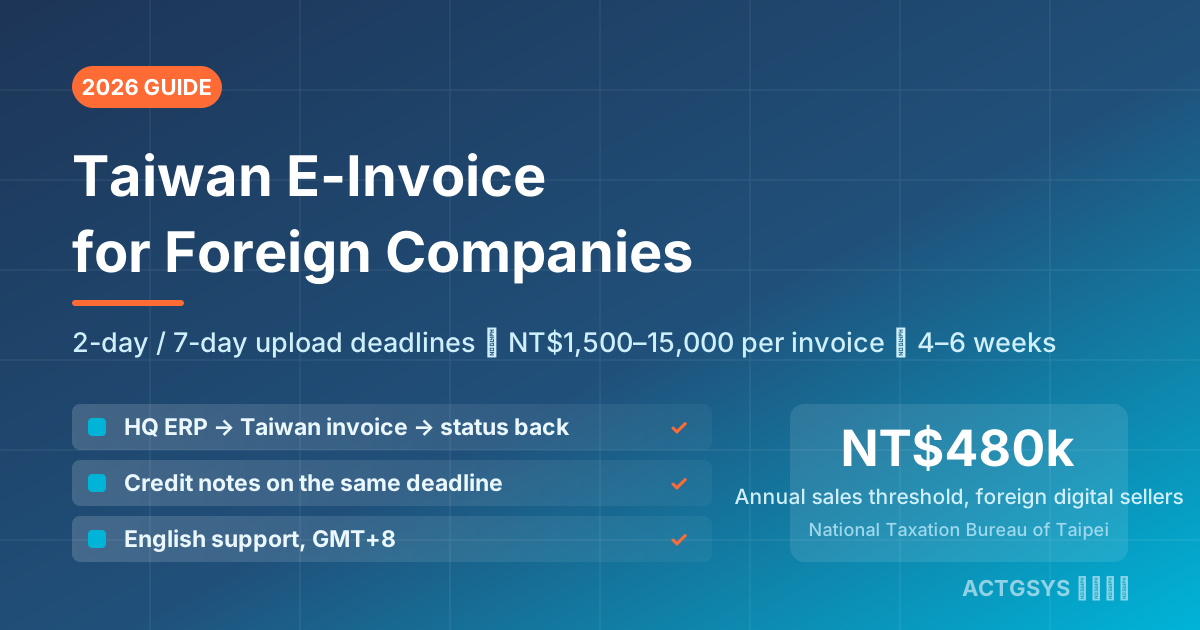
How a foreign-owned Taiwan subsidiary or branch connects its ERP to Taiwan's e-invoice platform: 2-day B2C / 7-day B2B upload deadlines, NT$1,500–15,000 per-invoice penalties, three integration paths, and a 4–6 week project from NT$50,000.
What would this cost you?
Answer five questions. Within three working days you get a price range and what it covers. No deck, no follow-up sales calls.
Prefer to talk?LINE·02-2553-8084