AI Customer Churn Prediction and Retention (2026)
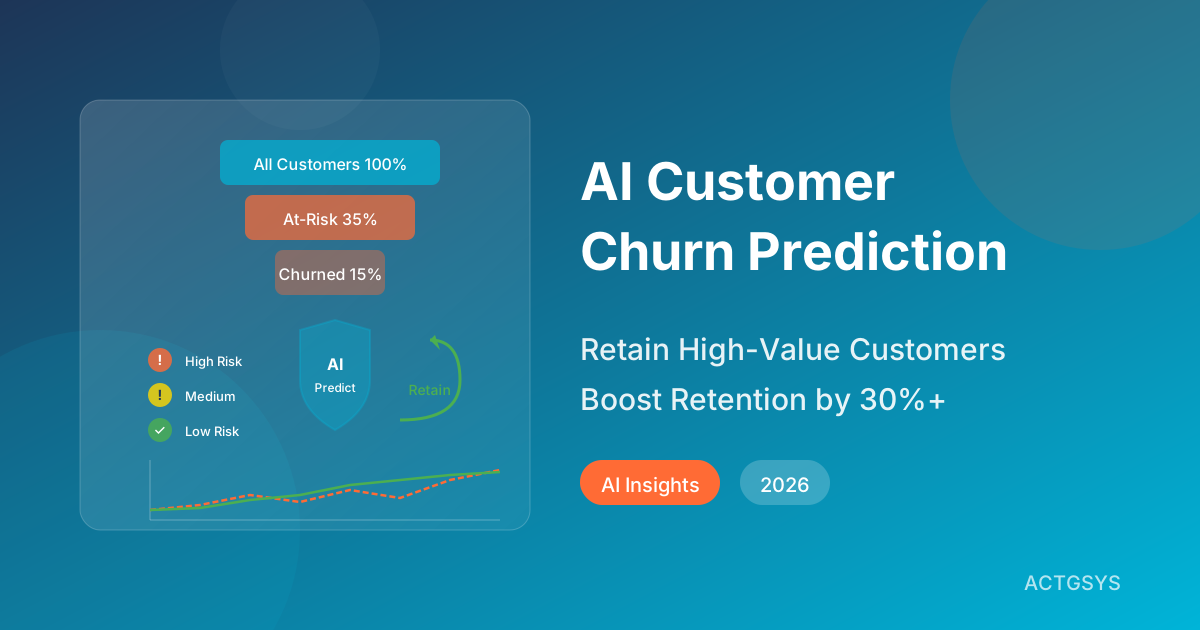
Acquiring a new customer costs 5-7 times more than retaining an existing one. Yet most SMEs spend 80% of their marketing budget on acquisition while ignoring existing customer attrition. Even more concerning: by the time you realize a customer has left, it's usually too late. In 2026, AI churn prediction technology can sound the alarm 30-90 days before a customer actually leaves, giving you ample time to take action.
What Is Churn Prediction? Why AI Is the Game-Changer
The Hidden Costs of Customer Churn
Customer churn doesn't just mean lost revenue — it carries a cascade of hidden costs:
- Direct revenue loss: Losing future purchases from that customer
- Wasted acquisition costs: Previous marketing and sales investments go down the drain
- Negative word-of-mouth: Dissatisfied customers may spread negative reviews
- Team morale impact: Continuous churn erodes sales team confidence
- Data asset loss: Losing behavioral data and interaction history for that customer
Traditional Methods vs AI Prediction
| Aspect | Traditional Methods | AI Churn Prediction |
|---|---|---|
| Analysis Timing | Post-mortem (customer already gone) | Early warning (30-90 days ahead) |
| Analysis Dimensions | Single metric (e.g., purchase frequency) | Multi-dimensional analysis (dozens of features) |
| Accuracy | ~50-60% | ~80-92% |
| Personalization | One-size-fits-all | Individual customer assessment |
| Action Recommendations | Generic discounts | Personalized retention strategies |
| Update Frequency | Monthly or quarterly | Real-time or daily updates |
Core Principles of AI Churn Prediction Models
Key Prediction Features
AI models analyze customer behavior data across these dimensions:
1. Transaction Behavior Features
- Purchase frequency changes (last 30/60/90 days vs. historical baseline)
- Average order value trends
- Changes in purchase category diversity
- Days since last purchase (Recency)
2. Interaction Behavior Features
- Website/app login frequency decline
- Email open and click-through rate changes
- Customer service contact frequency and complaint counts
- Social media/messaging interaction frequency changes
3. Sentiment Features
- NPS (Net Promoter Score) changes
- Sentiment analysis results from customer feedback
- Return/exchange ratios
- Rating and review content changes
4. External Environment Features
- Competitor activities (e.g., major promotions)
- Industry seasonal fluctuations
- Approaching contract expiration dates
How Prediction Models Work
- Data Collection: Gather customer behavior data from CRM, transaction systems, and service platforms
- Feature Engineering: Transform raw data into meaningful predictive features
- Model Training: Train prediction models using historical churn customer data
- Risk Scoring: Calculate a churn risk score (0-100) for each customer
- Segmented Action: Trigger corresponding retention strategies based on risk levels
- Impact Tracking: Continuously monitor retention action effectiveness and feed back to the model
Implementation: Building a Churn Early Warning System
Step 1: Define "Churn" Criteria
Different industries define churn differently — start with clear definitions:
| Industry | Churn Definition Example |
|---|---|
| SaaS Software | Contract expires without renewal |
| E-commerce Retail | No purchase for 90+ days |
| Food & Beverage | No visit for 45+ days |
| B2B Services | Quarterly purchase amount drops 50%+ |
| Subscription Services | Cancellation or plan downgrade |
Step 2: Build an RFM + AI Hybrid Model
Combine the classic RFM model with AI prediction:
- R (Recency): How long since the last purchase?
- F (Frequency): How many purchases in a given period?
- M (Monetary): Total spending amount?
Layer AI behavioral analysis on top of RFM for more precise churn prediction:
| Risk Level | RFM Indicators | Behavioral Signals | Recommended Action |
|---|---|---|---|
| High Risk (Red) | R > 60 days, F down 50% | Complaints up, zero interaction | Immediate VIP outreach |
| Medium-High (Orange) | R > 30 days, F down 30% | Open rates down, returns up | Exclusive offer + follow-up |
| Medium (Yellow) | F slightly declining | Reduced interaction frequency | Push relevant content, survey |
| Low Risk (Green) | Metrics stable | Normal interaction | Maintain current strategy |
Step 3: Design a Retention Strategy Matrix
Create differentiated strategies based on customer value and churn risk:
High Value + High Risk
- Assign dedicated account manager for one-on-one outreach
- Offer exclusive upgrades or VIP experiences
- Investigate root causes and address immediately
High Value + Medium Risk
- Send personalized appreciation messages
- Boost loyalty rewards
- Invite to exclusive events
Medium Value + High Risk
- Send limited-time repurchase offers
- Recommend potentially interesting new products
- Conduct satisfaction surveys for feedback
Low Value + High Risk
- Automated win-back promotions
- Minimize operational costs while maintaining basic interaction
- Evaluate whether the customer is worth retaining
Step 4: Build Automated Retention Workflows
Set up trigger-based automation:
- AI model updates risk scores daily
- Risk score exceeds threshold → Auto-trigger alert
- System routes to appropriate retention message based on segment
- Sales team receives high-risk customer notification → Schedule follow-up
- Track customer response → Update risk assessment
- Regularly analyze retention effectiveness → Optimize strategy
Measuring Success: Key Retention Metrics
| Metric | Description | Formula | Target |
|---|---|---|---|
| Retention Rate | Percentage of customers retained | (End customers - New)/Start customers | > 85% |
| Churn Rate | Percentage of customers lost | 1 - Retention Rate | < 15% |
| CLV | Expected lifetime value | Avg. order × Frequency × Lifespan | Growing |
| Prediction Accuracy | AI correct prediction rate | (TP+TN)/Total | > 80% |
| Win-back Rate | High-risk customers successfully retained | Retained/High-risk total | > 40% |
Frequently Asked Questions
Q1: Can I build a churn prediction model without extensive historical data?
Yes. You can start with an RFM rules-based model using basic transaction data (purchase time, amount, frequency). As data accumulates, gradually upgrade to AI prediction models.
Q2: How accurate is AI churn prediction typically?
Depending on industry and data quality, accuracy generally reaches 80-92%. The key factor is feature engineering quality and data completeness, not model complexity.
Q3: How much budget does AI churn prediction require for SMEs?
Using a CRM with built-in AI features (like DanLee CRM), additional costs are near zero. For custom development, initial investment is approximately $1,500-6,500, depending on data integration complexity.
Q4: Does churn prediction work for B2B scenarios?
Absolutely. B2B prediction features differ, focusing more on contract renewal behavior, purchase volume changes, and key contact person turnover. B2B churn typically has larger impact, making early warning systems even more critical.
Q5: How do I avoid "over-contacting" customers?
Set reasonable trigger frequency caps (e.g., maximum 2-3 retention communications per customer per month) and ensure every interaction delivers genuine value rather than pure sales pitches. The AI system also auto-adjusts communication frequency based on customer responses.
Conclusion: Prevention Over Cure — Data-Driven Retention
In 2026, where customer attention is increasingly fragmented, passively waiting for customers to leave before trying to recover them is no longer enough. AI churn prediction transforms your approach from "firefighting customer service" to "preventive customer management," proactively engaging customers before they consider leaving.
ACTGSYS's DanLee CRM features built-in intelligent customer analytics, paired with professional AI model deployment services, to help you build a data-driven customer retention system.
Want to reduce your customer churn rate? Schedule a free consultation now and let us use data to help you retain every high-value customer.
Products & Solutions in This Article
Related Articles
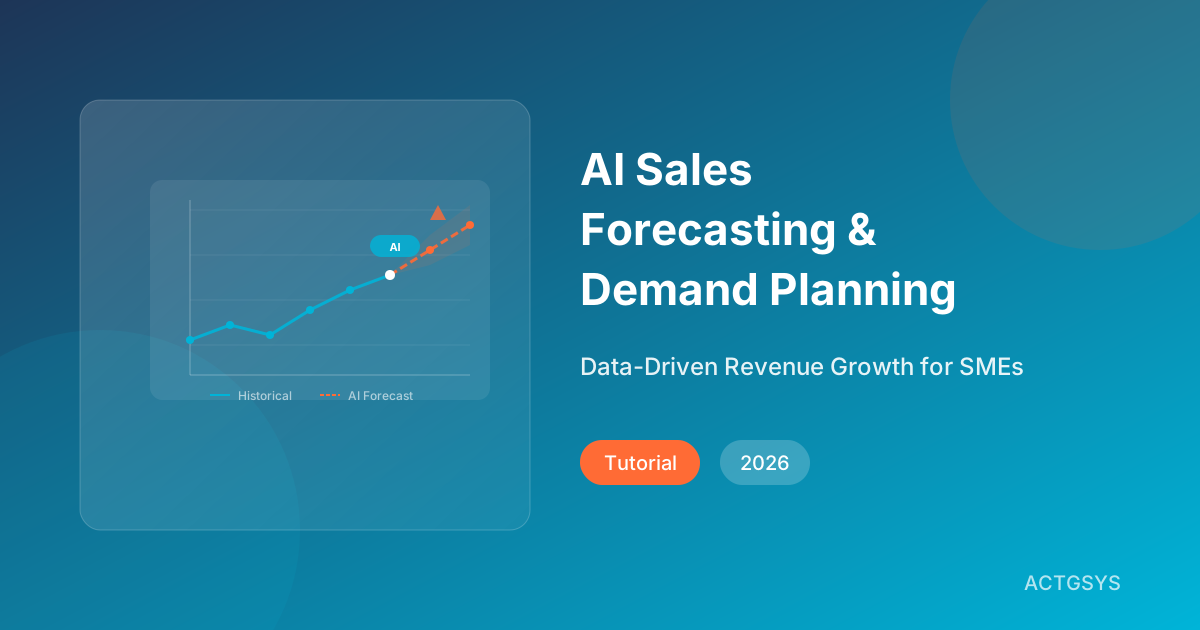
AI Sales Forecasting and Demand Planning (2026)
Learn how AI-powered sales forecasting and demand planning can boost prediction accuracy to 85%, helping SMEs transition from gut-feeling to data-driven decision making.
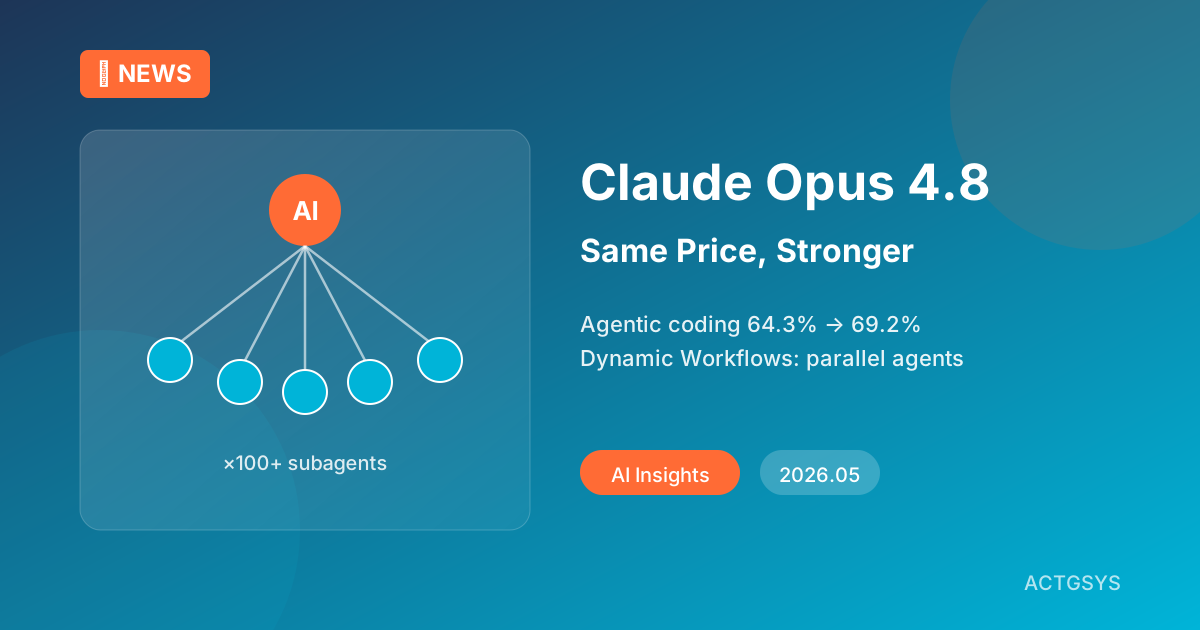
Anthropic Claude Opus 4.8 (2026): Same Price, Stronger
On May 28, 2026, Anthropic launched Claude Opus 4.8, holding the same $5 / $25 per 1M token pricing as its predecessor while lifting agentic coding from 64.3% to 69.2% and adding Dynamic Workflows — a research preview that orchestrates hundreds of parallel subagents. We unpack what this upgrade means for Taiwan SME automation.
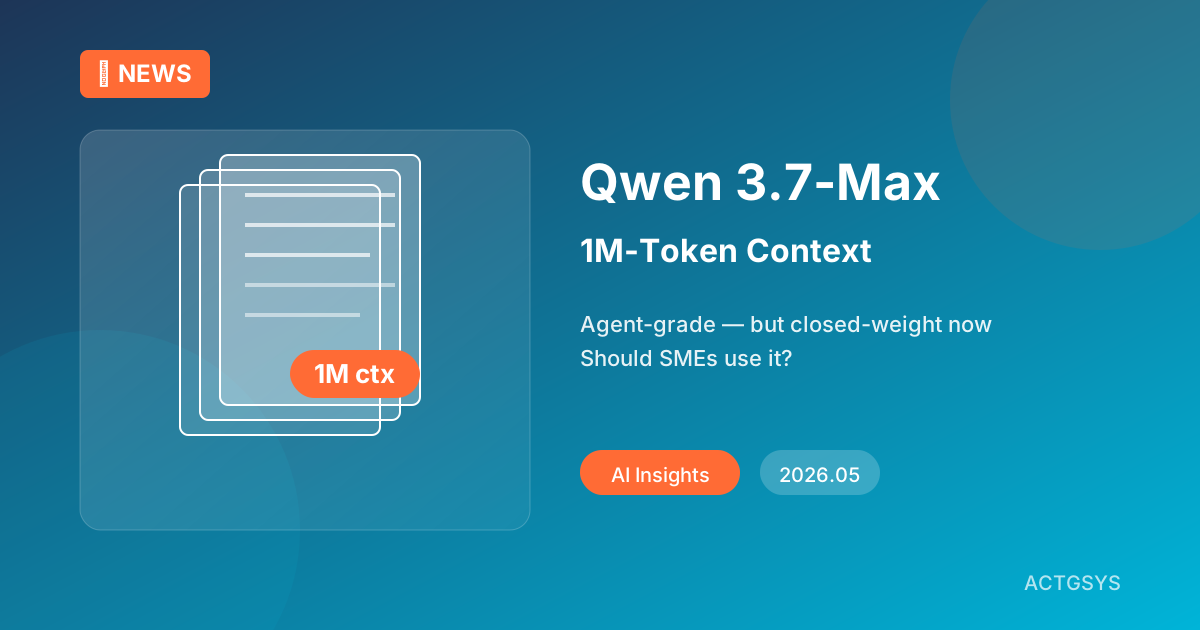
Alibaba Qwen 3.7-Max (2026): 1M-Token Context
On May 20, 2026, Alibaba launched Qwen 3.7-Max with a 1M-token context window and native extended thinking, scoring 69.7 on Terminal-Bench 2.0 and 60.6 on SWE-Bench Pro — but it's closed-weight and API-only for the first time. We unpack what this Chinese flagship means for Taiwan SME long-document processing and cost.
What would this cost you?
Answer five questions. Within three working days you get a price range and what it covers. No deck, no follow-up sales calls.
Prefer to talk?LINE·02-2553-8084