AI Dynamic Pricing for SMEs: Real-Time Revenue 2026
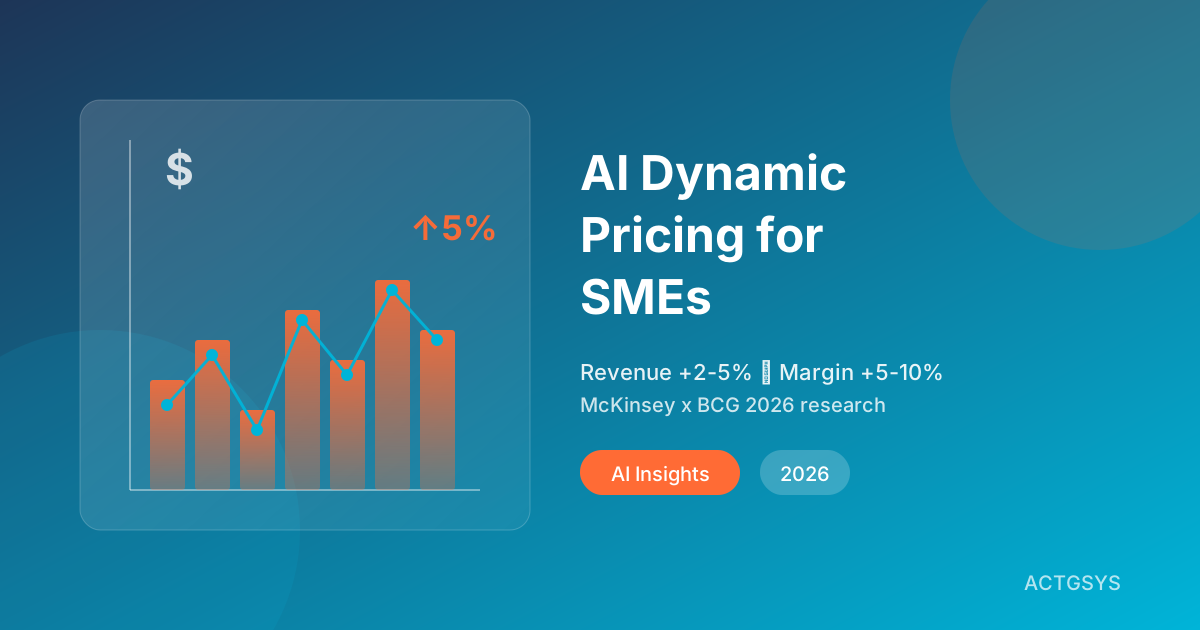
TL;DR: AI dynamic pricing uses machine learning to adjust prices in real time based on demand, competition, inventory, and timing. According to McKinsey & Company and BCG (2026), adopters achieve 2–5% revenue lift and 5–10% margin improvement — yet fewer than 15% of retailers have deployed it globally, leaving SMEs a clear first-mover window.
Many SME owners treat pricing as an "annual back-office task," but in 2026 market conditions shift faster than humans can react — competitor promotions, raw material swings, seasonal demand, inventory pressure all reshape the "right price" daily. AI dynamic pricing offloads this high-frequency decision-making to algorithms, plugging the SME's biggest weakness: pricing precision.
What Is AI Dynamic Pricing? How Is It Different from Traditional Discounting?
AI dynamic pricing uses machine learning models to compute the optimal price for every item in every context, using demand forecasts, competitor prices, inventory levels, time of day, and customer segments. It is not "buy three get one free" promotion logic — it's a self-learning pricing engine.
According to McKinsey's 2026 B2B pricing research, AI dynamic pricing delivers 2–5% revenue lift and 5–10% margin improvement. A standout case: one .5 billion B2B distributor achieved margin uplift exceeding 250 basis points after implementation.
| Dimension | Traditional Pricing | AI Dynamic Pricing |
|---|---|---|
| Update frequency | Quarterly / semi-annually | Real-time (hourly or by minute) |
| Decision basis | Cost-plus, manual judgment | Multi-dimensional data, ML predictions |
| Price granularity | Same across the store | Segmented by customer / channel / time / SKU |
| Personalization | None | Can price by customer purchase history |
| Reaction speed | Human (days/weeks) | Algorithm (minutes/seconds) |
Why Is 2026 the Critical Window for SMEs to Adopt Dynamic Pricing?
2026 is the optimal entry window for SMEs because three forces converge: technology costs have dropped, cloud services are widespread, and competitors haven't moved yet. BCG's "Retail Rewired" (2026) report shows AI-pricing retailers gain 5–10% margin advantage — but fewer than 15% of retailers globally have completed adoption, meaning the first-mover bonus is still available.
Gartner (2026) forecasts global AI spending will reach .52 trillion in 2026 (44% YoY growth), with enterprise software up 14.7%. Three implications: more pricing tool options at lower prices; large retailers are already deploying at scale, so SMEs lose ground if they wait; 2026 is the inflection year where dynamic pricing shifts from "advanced experiment" to "table stakes."
Which Industries Benefit Most from AI Dynamic Pricing?
AI dynamic pricing delivers the highest impact in industries with volatile demand, transparent competitor pricing, and large product catalogs:
- E-commerce retail — transparent competitor prices, sensitive demand curves, hundreds to tens of thousands of SKUs
- Travel and hospitality — large peak/off-peak gap, high price elasticity (already standard for international hotels)
- B2B distribution — multi-tier customers, large order-size variance, inefficient long-tail SKU pricing
- Restaurants — clear time-band demand variance (lunch/dinner/delivery peaks)
- Manufacturing OEM — volatile raw material costs, quotes need fast response
Poor fits: healthcare, legal, financial advisory — services where trust relationships matter most. Customers in these sectors are extremely sensitive to price volatility, and dynamic pricing damages relationships.
A 6-Step Playbook for SMEs Adopting AI Dynamic Pricing
The most common SME mistake is "buy a packaged tool and go live." Without the data foundation and internal alignment, the system becomes an expensive shelfware. Six steps validated across multiple Taiwan SME deployments:
- Audit pricing data readiness — are 2 years of sales records, competitor prices, and customer segmentation data available?
- Define dynamic pricing "guardrails" — minimum price, maximum price, protected margin floors so the algorithm doesn't go rogue
- Pilot on the most price-elastic items — never go all-store at once. Pick 10–20 SKUs and run a 4–8 week pilot
- Establish A/B testing — compare dynamic-priced vs. fixed-price product groups for revenue delta
- Integrate ERP / CRM data flows — AI needs customer history and live inventory to price accurately
- Build a human review layer — major price changes (e.g., over 20% discount) still need human sign-off to protect brand
Taiwan's III MIC research (2025) on SME digital transformation found that 75% of failed implementations stem from "buying tools before data was ready" — not from insufficient technology.
Hidden Risks of AI Dynamic Pricing and How to Manage Them
The biggest risk isn't algorithmic error — it's customer trust. When customers notice the same product showing different prices at different times or from different accounts, you risk negative reviews or lawsuits. Reddit r/smallbusiness and X discussions of dynamic pricing consistently center on "opacity" and "perceived price discrimination."
Four risks to manage:
- Customer detection — avoid showing dramatic price swings to a single logged-in account in a short window
- Regulatory risk — the EU's Digital Services Act requires disclosing the basis for dynamic pricing; Taiwan's Consumer Protection Act has similar principles
- Competitive convergence — if every competitor uses AI pricing, you risk an "algorithmic price war"
- Brand consistency — too-frequent discounting erodes brand value
Best practice: confine dynamic pricing to "promotional zones" and "inventory clearance," while keeping core products at stable "brand prices."
Frequently Asked Questions
How much data do I need to start AI dynamic pricing?
At minimum, 12–24 months of complete sales data (timestamp, SKU, price, quantity, customer ID per transaction), competitor price scraping (via crawlers or third-party data services), and live inventory data. Companies without sufficient data should first deploy ERP/CRM for 6–12 months to accumulate the foundation before launching AI pricing.
How much does AI dynamic pricing cost for SMEs?
Two cost categories: (1) SaaS subscription tools (Pricefx, Competera, Prisync) start around USD 300–1,500/month — ideal for e-commerce; (2) Custom AI model development runs USD 15,000–60,000 one-time — ideal for B2B or manufacturing with unique pricing logic. Most SMEs start with SaaS and graduate to custom once revenue grows.
Will dynamic pricing alienate customers?
Possibly, but it's controllable. Key questions: who and how. For B2B customers, tiered quoting (volume-based pricing) is industry standard and accepted. For B2C, wrap dynamic pricing in promotion language (limited-time offers, member prices) so customers don't feel individually discriminated against.
What's the difference between dynamic pricing and promotional discounting?
Promotions are "human-planned, fixed-window, single-rule" (e.g., 10% off everything during Black Friday). AI dynamic pricing is "algorithmic, real-time, multi-dimensional, personalized" (e.g., adjusting based on inventory, demand, customer history continuously). They coexist — major campaigns stay human-led; daily pricing goes to AI.
My competitors haven't adopted yet — am I too early?
No — this is the optimal entry window. BCG research shows only 15% of retailers globally have completed deployment, meaning early movers capture the 5–10% margin lead. Once competitors catch up, that bonus collapses to "deploy or fall behind" baseline. For SMEs, 2026–2027 is the cleanest window to build a differentiated advantage.
Conclusion: Return Pricing Decisions to Data, Free Humans for Strategy
AI dynamic pricing isn't about replacing pricing teams — it's about offloading "high-frequency decisions humans can't make" to algorithms, freeing humans for "strategic decisions algorithms can't make" (brand positioning, long-term contracts, customer relationships). SMEs still pricing via Excel and "owner intuition" are bringing an abacus to a digitized fight.
ACTGSYS provides Taiwan SMEs with AI dynamic pricing solutions integrated with Dinkoko ERP and DanLee CRM, covering data integration, model training, and review workflow end-to-end — helping you capture the 2026 first-mover dividend.
Want to see how AI dynamic pricing applies to your product line? Schedule a free consultation.
Last updated: 2026-05-01
Products & Solutions in This Article
AI-powered CRM for lead management, customer tracking, and sales pipeline optimization designed for SMEs.
AI-driven ERP focusing on procurement, inventory, and supply chain management. Each customer deployed on dedicated cloud infrastructure.
Related Articles
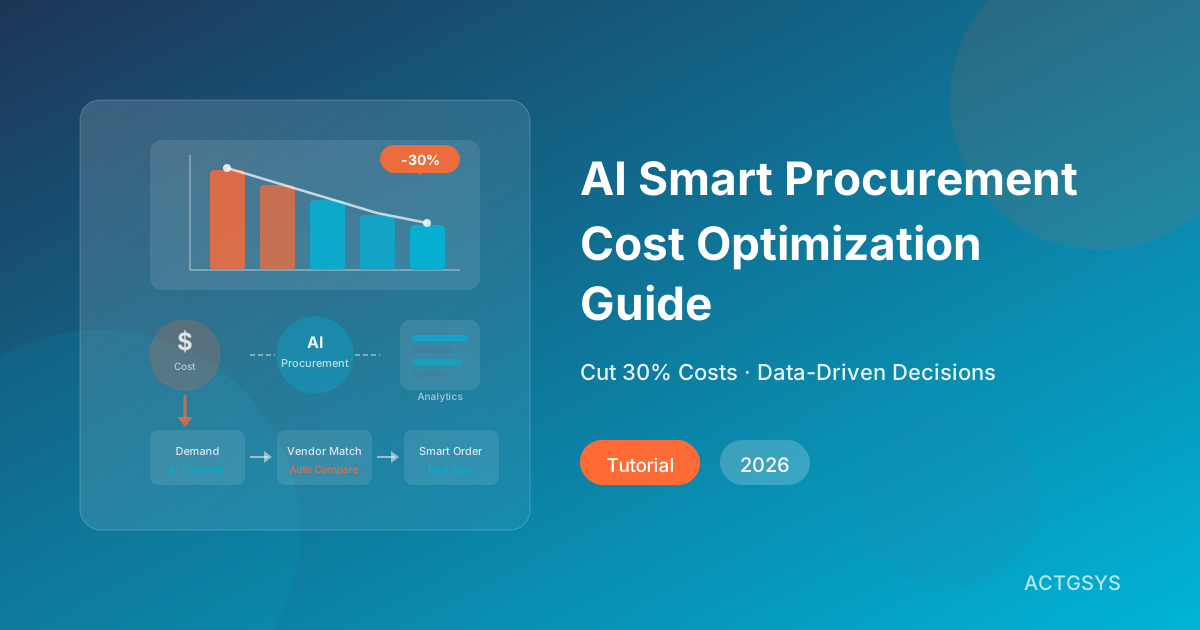
AI Smart Procurement & Cost Optimization Guide
Learn how AI is transforming procurement for small and mid-sized businesses — from supplier evaluation to price prediction, with ROI models, implementation steps, and Dinkoko ERP integration.
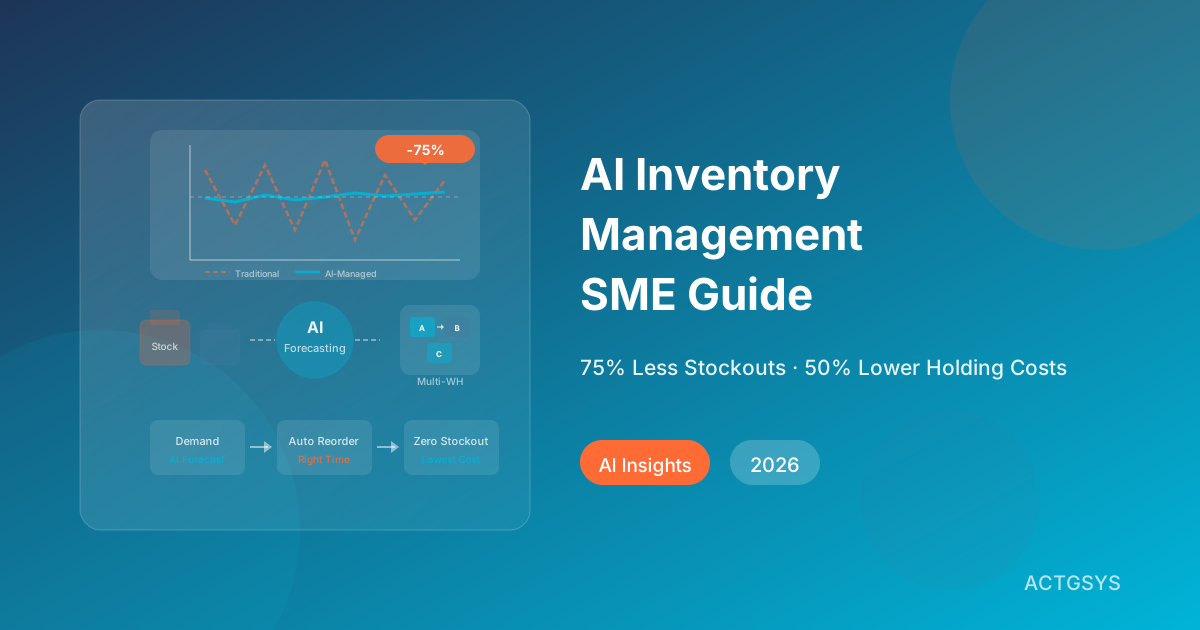
AI Inventory Management: Cut Stockouts 75% (2026)
A comprehensive guide on how AI-powered inventory management helps SMEs predict demand, automate reorder points, cut holding costs by 20-50%, with traditional vs AI comparison, multi-warehouse strategies, and Dinkoko ERP integration.
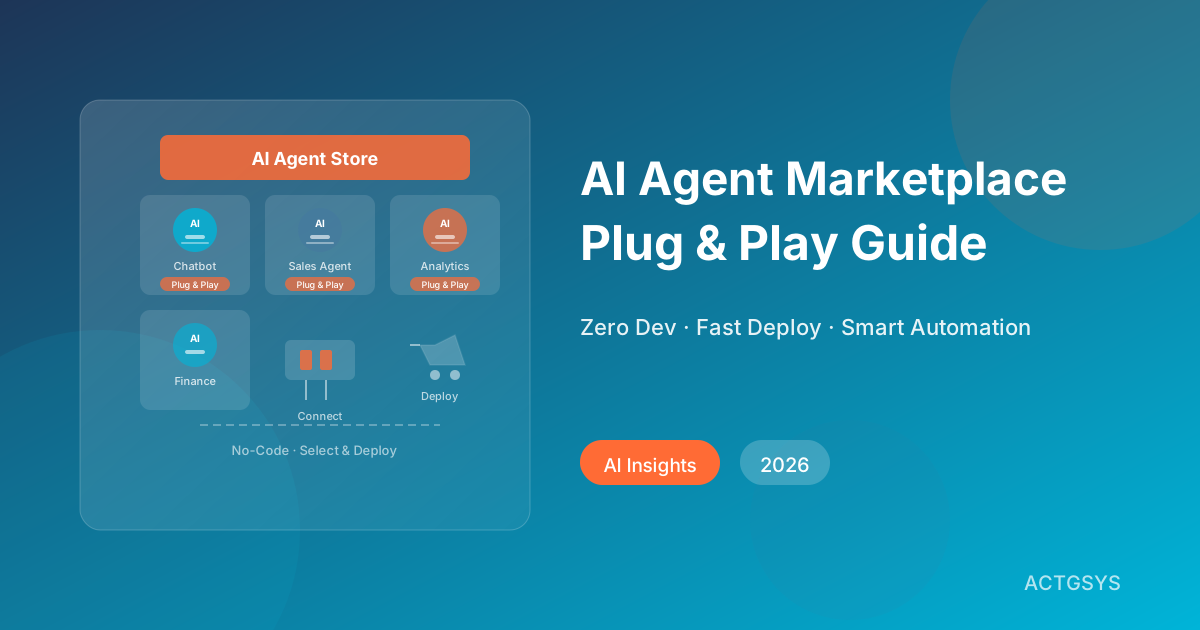
AI Agent Marketplaces: No-Code AI for SMEs (2026)
A comprehensive breakdown of how AI Agent marketplaces let small and medium businesses deploy intelligent automation without custom development — featuring platform comparisons, a buyer's guide, and 3 real-world success stories.
What would this cost you?
Answer five questions. Within three working days you get a price range and what it covers. No deck, no follow-up sales calls.
Prefer to talk?LINE·02-2553-8084