AI Real-Time Decision Engines for SMEs (2026)
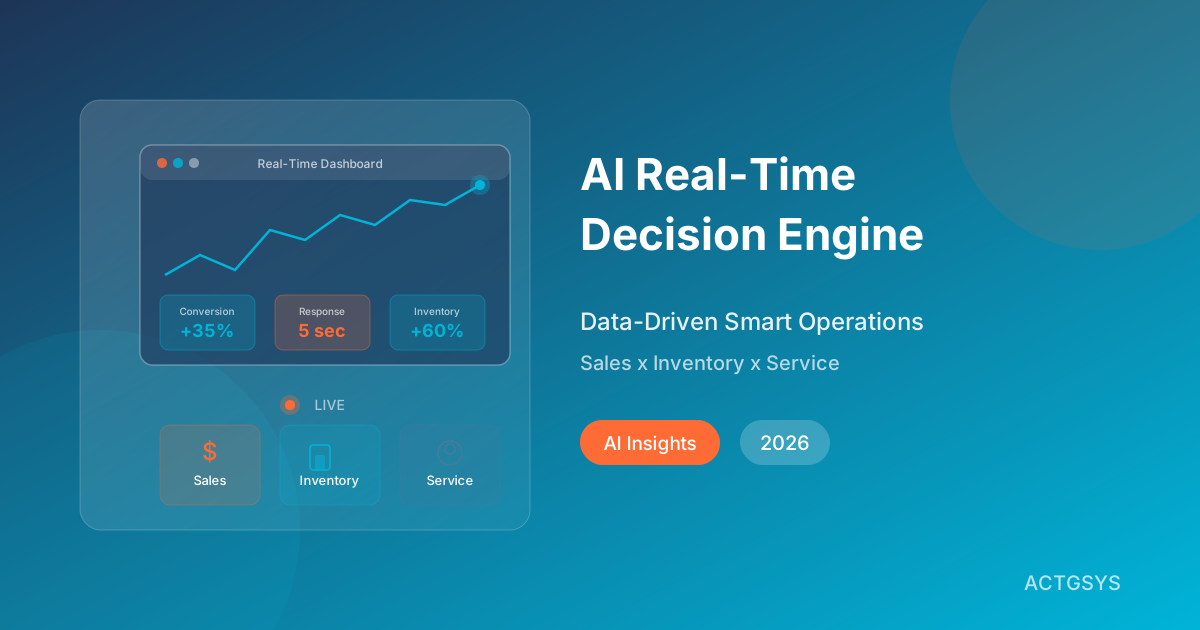
Picture this scenario: your sales manager is still waiting for weekly reports to understand last week's performance, while your competitor's AI Agent is already adjusting pricing strategies in real time, automatically triggering restock orders, and proactively pushing high-conversion marketing messages. In 2026, the speed of business decisions is shrinking from weeks to seconds, and the AI real-time decision engine is at the core of this revolution. According to recent research, 85% of enterprise executives expect their workforce to make data-driven decisions using AI Agent recommendations in real time by 2026.
What Is an AI Real-Time Decision Engine?
An AI Real-Time Decision Engine is a system architecture that combines streaming data processing, machine learning models, and AI Agent capabilities. It can:
- Capture in real time: Continuously receive data from CRM, ERP, web analytics, social media, and other sources
- Analyze in real time: Interpret data within milliseconds using pre-trained AI models
- Act in real time: Automatically trigger corresponding actions or push decision recommendations based on analysis results
Unlike traditional batch-processing reports, a real-time decision engine doesn't "look back" — it "acts now."
Traditional vs. AI Real-Time Decision Making
| Dimension | Traditional Decision Model | AI Real-Time Decision Model |
|---|---|---|
| Data Freshness | Daily/weekly/monthly reports | Real-time streaming |
| Analysis Method | Manual report review | AI automatic pattern detection |
| Decision Speed | Hours to days | Milliseconds to seconds |
| Action Trigger | Manual execution | Automatic or semi-automatic |
| Anomaly Detection | Discovered after the fact | Real-time alerts |
| Personalization | One-size-fits-all strategy | Per-customer personalization |
Three Scenarios: How AI Real-Time Decisions Transform SME Operations
Scenario 1: Sales and Customer Management
Traditional CRM systems only record customer data, but an AI real-time decision engine makes your CRM "come alive":
Real-Time Lead Scoring: When a prospect browses your website, opens an email, or interacts on social media, the AI Agent instantly calculates a purchase intent score and automatically notifies sales reps when the score crosses a threshold.
Dynamic Priority Ranking: Based on real-time customer behavior, AI automatically reorders follow-up priorities. For example, when a customer visits your pricing page for the third time, AI immediately pushes them to the top of the sales to-do list.
Smart Next-Best-Action Recommendations: AI analyzes historical conversion patterns of similar customers and instantly suggests the optimal follow-up strategy — whether to call, send an email, or schedule a product demo.
DanLee CRM has built-in AI real-time decision features that help sales teams increase close rates by 20-35%.
Scenario 2: Inventory and Supply Chain Management
The core challenge of inventory management is "having the right quantity at the right time." AI real-time decision engines achieve this through:
Real-Time Demand Fluctuation Detection: When a product's sales velocity suddenly spikes (e.g., after a KOL recommendation), the AI Agent automatically triggers the restocking process before inventory drops below safety levels.
Supply Chain Risk Early Warning: By integrating external data (weather, shipping schedules, raw material prices), AI can provide advance warning of potential supply disruptions and suggest alternatives.
Dynamic Safety Stock Adjustment: Based on real-time sales data and seasonal patterns, AI automatically adjusts safety stock levels for each SKU, preventing excess inventory from tying up capital or stockouts from losing orders.
Dinkoko ERP's AI inventory module automates these processes, helping customers reduce inventory costs by an average of 25%.
Scenario 3: Customer Service and Experience
The value of real-time decisions is especially evident in customer service:
Real-Time Sentiment Detection: AI Agents analyze sentiment trends during customer conversations in real time. When rising dissatisfaction is detected, the case is automatically escalated to senior agents or managers.
Predictive Service: Before customers even complain, AI detects potential issues based on usage behavior. For example, when the system detects three consecutive failed login attempts, AI proactively sends password reset instructions.
Personalized Response Generation: AI generates the most appropriate response content based on the customer's interaction history, purchase records, and language preferences — instead of generic template replies.
Four Steps for SMEs to Implement AI Real-Time Decisions
SMEs don't need to build massive data teams to benefit from real-time decisions. Here's a pragmatic implementation path:
Step 1: Audit Decision Bottlenecks (1-2 weeks)
List which operational decisions are most often "too slow" or "too late." For example:
- Customer churn is discovered only after it's too late
- Restocking hot-selling products always lags behind
- Sales follow-ups have no priority ranking
Step 2: Choose SaaS Platforms with Built-in AI (2-4 weeks)
No need to build AI infrastructure from scratch. Choose CRM or ERP systems with built-in real-time decision features, such as DanLee CRM and Dinkoko ERP, to significantly shorten implementation time.
Step 3: Configure Trigger Rules and Action Scripts (2-4 weeks)
Define what actions the AI Agent triggers under what conditions. For example:
- When customer Lead Score > 80 → automatically send product trial invitation
- When inventory < 120% of safety level → generate restocking recommendation
- When customer sentiment score < 3 → escalate to manager
Step 4: Monitor, Learn, Iterate (Ongoing)
AI real-time decision engines get smarter with use. Continuously monitor AI recommendation adoption rates and outcomes, and adjust trigger rules and model parameters accordingly.
Before and After: Impact Metrics
Based on data from SMEs that have implemented real-time decision engines, here are typical improvements:
| Metric | Before | After | Improvement |
|---|---|---|---|
| Sales Lead Response Time | 4-24 hours | 5-15 minutes | 96% reduction |
| Inventory Turnover Rate | 6-8x per year | 10-14x per year | 60-75% increase |
| Customer Churn Early Warning | Discovered after the fact | 2-4 weeks advance | From zero to proactive |
| Revenue per Sales Rep | Baseline | +25-40% | Significant increase |
| Customer Complaint Satisfaction | 72% | 89% | 17% increase |
FAQ
Q1: Does a real-time decision engine require a real-time streaming database?
Not necessarily. Modern SaaS platforms handle streaming data complexity on the backend. Using platforms like DanLee CRM or Dinkoko ERP, you only need to ensure API connections between systems are functioning — the platform automatically handles real-time data synchronization and analysis.
Q2: Our data is scattered across multiple systems. Can we still use real-time decisions?
Yes. The key is building data bridges between systems. This can be achieved through API integration or middleware that connects CRM, ERP, and e-commerce platform data. ACTGSYS's technical team specializes in helping enterprises build cross-system real-time data flows.
Q3: Will AI real-time decisions replace human judgment?
No. AI real-time decision engines are designed to "assist" rather than "replace." In most scenarios, AI handles real-time analysis and recommendations, while humans make the final critical decisions. As trust builds, enterprises can gradually expand the scope of AI autonomous decisions — for example, letting AI automatically handle low-risk routine decisions.
Q4: What are the approximate implementation costs?
Using SaaS platforms with built-in AI features keeps implementation costs very low. With DanLee CRM, for example, AI real-time decision features are included in the standard subscription plan with no additional AI infrastructure costs. Custom integration costs vary depending on system complexity.
Q5: How do we measure the effectiveness of AI real-time decisions?
Track these four core metrics: (1) Decision-to-Action Time; (2) AI recommendation adoption rate; (3) Business outcomes of AI-assisted decisions (e.g., close rates, inventory turnover); (4) Anomaly detection lead time and accuracy.
Conclusion: Data-Driven Isn't a Buzzword — It's About Speed
Business competition in 2026 is no longer just about products and prices — it's about decision speed. Companies that can respond to market changes instantly and meet customer needs in real time will hold a decisive competitive advantage.
AI real-time decision engines are no longer exclusive to large enterprises. Through modern SaaS platforms like DanLee CRM and Dinkoko ERP, SMEs can enjoy the efficiency gains of real-time decision-making at a reasonable cost.
If you want to learn how to build real-time decision capabilities for your enterprise, schedule a free consultation — our consulting team will create a customized implementation plan tailored to your needs.
Products & Solutions in This Article
AI-powered CRM for lead management, customer tracking, and sales pipeline optimization designed for SMEs.
AI-driven ERP focusing on procurement, inventory, and supply chain management. Each customer deployed on dedicated cloud infrastructure.
Related Articles
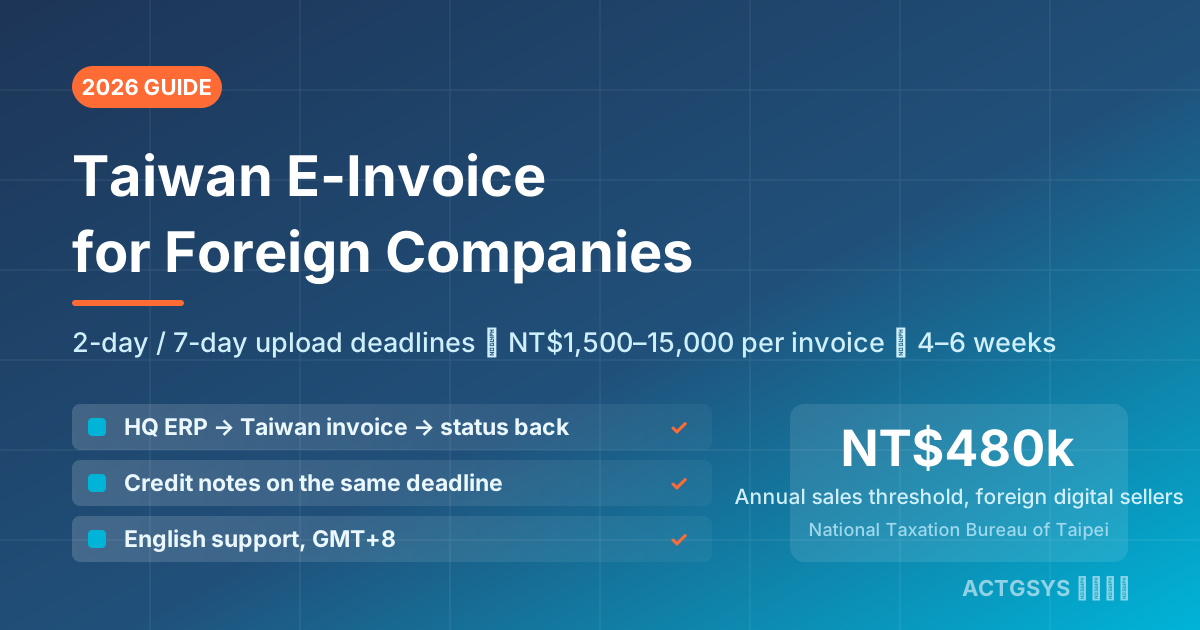
Taiwan E-Invoice for Foreign Companies 2026 - Cost
How a foreign-owned Taiwan subsidiary or branch connects its ERP to Taiwan's e-invoice platform: 2-day B2C / 7-day B2B upload deadlines, NT$1,500–15,000 per-invoice penalties, three integration paths, and a 4–6 week project from NT$50,000.
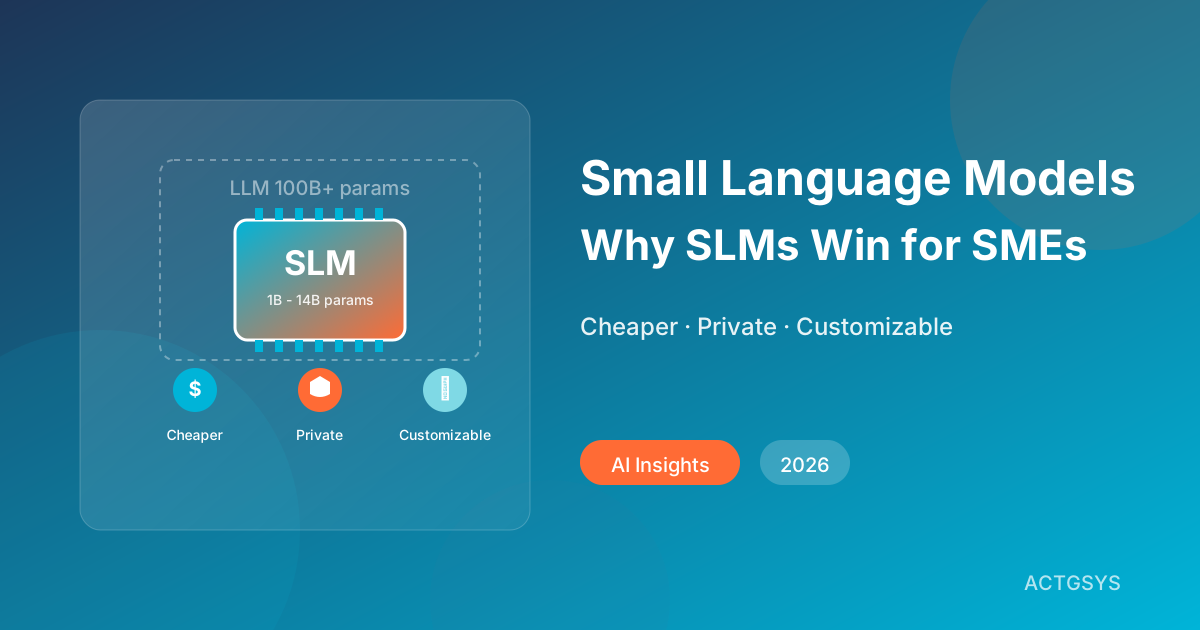
Small Language Models (SLM) for SMEs (2026)
Phi-4, Llama 3.2 and Apple Intelligence are pushing SLMs into the mainstream. This guide unpacks why small language models beat LLMs on cost, privacy and customization for SMEs.
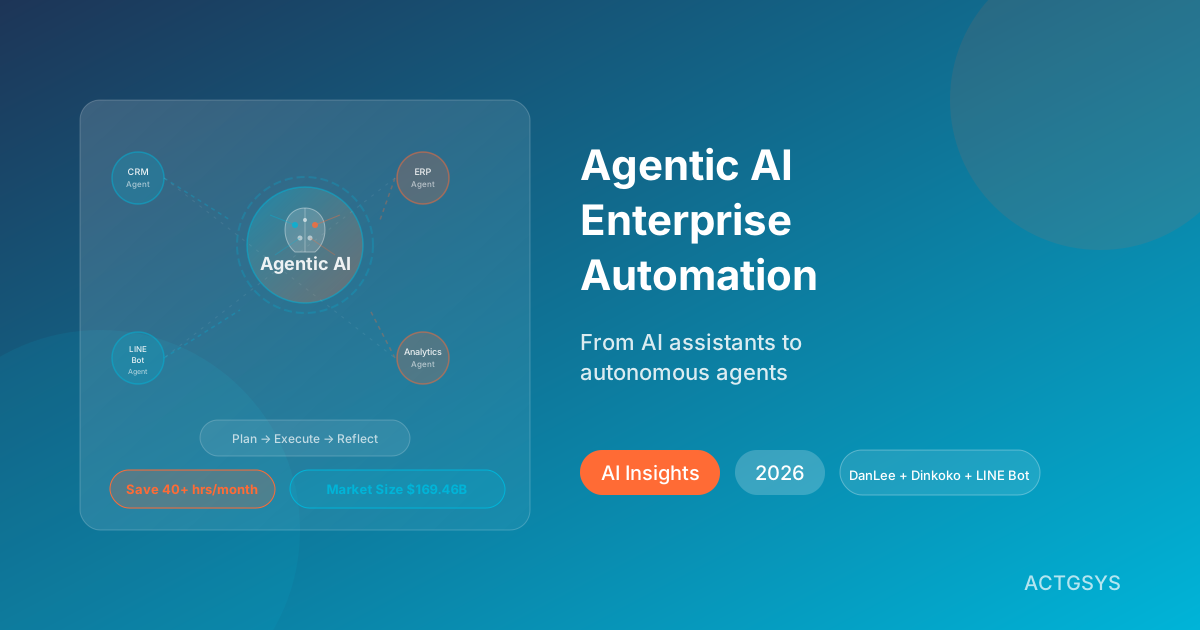
Agentic AI 2026: From Assistants to Autonomy
Deep dive into how Agentic AI surpasses traditional AI assistants with multi-agent orchestration, autonomous decision-making, and end-to-end process automation — helping SMEs save 40+ hours per month and dramatically boost operational efficiency.
What would this cost you?
Answer five questions. Within three working days you get a price range and what it covers. No deck, no follow-up sales calls.
Prefer to talk?LINE·02-2553-8084