AI Supply Chain & Inventory Optimization
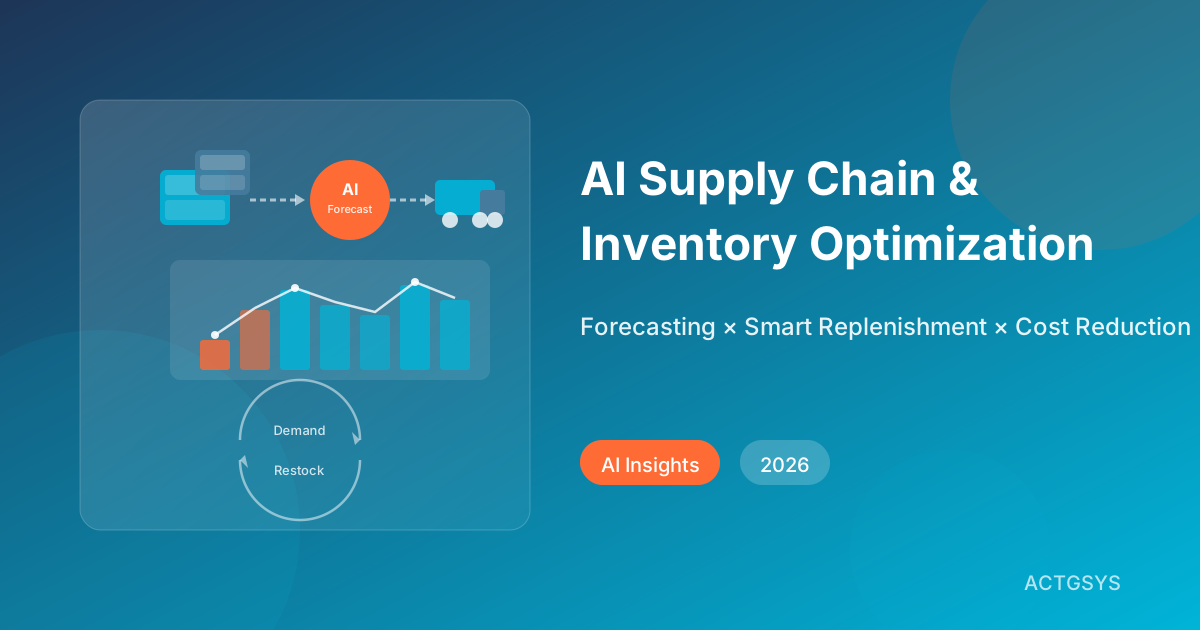
Inventory management remains one of the most persistent challenges for small and medium-sized enterprises. Overstock ties up capital and drives up warehousing costs; understock leads to lost orders and dissatisfied customers. Studies show that SMEs on average have 20-30% of their working capital locked in inventory, while obsolete or slow-moving stock accounts for 5-8% of revenue in losses. In 2026, AI technology is delivering a fundamentally new approach to supply chain and inventory management.
Why Do SMEs Need AI Supply Chain Management?
Traditional inventory management relies heavily on manual experience and spreadsheets, which struggle to keep pace with rapid market changes. Consider these data points:
- Inventory Overstock: SMEs average 60-90 days of inventory turnover, well above the industry benchmark of 30-45 days
- Stockout Losses: Lost orders due to stockouts account for 4-8% of potential revenue on average
- Labor Costs: Procurement and warehouse staff spend over 40% of their time on repetitive counting and replenishment tasks
- Forecast Error: Manual demand forecasting has an average error rate of 30-50%, leading to recurring inventory imbalances
The core value of AI supply chain management lies in replacing intuition-based decisions with data-driven ones, making every inventory investment more precise and efficient. For resource-constrained SMEs, this is not a "nice-to-have" luxury—it is an essential strategy for cost reduction and operational efficiency.
Four Core Technologies in AI Supply Chain Management
Demand Forecasting
AI demand forecasting engines integrate multi-dimensional data—historical sales, seasonal factors, promotional campaigns, weather patterns, market trends, and even social media sentiment—to build accurate prediction models. Compared to traditional moving average methods, AI forecasting can improve accuracy from 50-60% to 85-92%, dramatically reducing safety stock requirements.
Practical use cases include:
- Automatically identifying seasonal transition points, adjusting stocking strategy 2-4 weeks in advance
- Combining promotional calendars to precisely estimate volume surges during campaign periods
- Detecting demand ramp-up curves for new product launches and dynamically adjusting replenishment quantities
Smart Replenishment
AI smart replenishment systems calculate optimal reorder timing and quantities based on real-time inventory levels, in-transit orders, forecasted demand, and supplier lead times. Through continuous learning from historical data, these systems constantly refine replenishment parameters to achieve "just right" inventory levels.
Modern ERP systems such as Dinkoko are beginning to integrate AI replenishment recommendation features, allowing SMEs to receive intelligent replenishment alerts within their daily inventory operations without investing in separate standalone systems.
Supplier Intelligence
AI can automatically analyze multiple supplier metrics—on-time delivery rate, quality acceptance rate, price fluctuations, and capacity stability—to generate composite scores and risk alerts. When a supplier shows trends of delivery delays or quality issues, the system provides early warnings and suggests backup alternatives.
Key metrics include:
- On-Time Delivery Rate
- Quality Return Rate
- Price Competitiveness Index
- Flexibility and Responsiveness Score
Logistics Route Optimization
For businesses with multi-location distribution, AI route optimization considers variables such as distance, traffic conditions, delivery time windows, and vehicle load limits to plan the lowest-cost logistics solution. Some businesses have reduced logistics costs by 15-25% after implementation.
Practical Benefits: AI vs Traditional Inventory Management
The following table compares key metrics between traditional and AI-driven inventory management:
| Metric | Traditional Approach | AI-Driven Approach | Improvement |
|---|---|---|---|
| Demand Forecast Accuracy | 50-60% | 85-92% | +25-32% |
| Inventory Turnover Days | 60-90 days | 30-45 days | 50% reduction |
| Stockout Rate | 8-15% | 2-5% | 60-70% reduction |
| Safety Stock Level | High (experience-based) | Precisely calculated | 30-40% reduction |
| Inventory Holding Cost | 15-25% of revenue | 8-15% of revenue | 30-40% reduction |
| Replenishment Decision Time | 2-4 hours/day | Real-time automated | 90% time saved |
| Slow-Moving Inventory Ratio | 10-20% | 3-8% | 50-60% reduction |
| Supplier Management | Quarterly manual review | Real-time dynamic scoring | 80% efficiency gain |
As the table shows, AI inventory management delivers significant improvements across virtually every key metric, with inventory turnover reduction and stockout rate improvement being the most dramatic.
Three-Step Guide for SMEs to Adopt AI Supply Chain
Step 1: Data Preparation and System Audit (Months 1-2)
AI is built on data. Before implementation, businesses need to:
- Audit existing data sources: Confirm that sales records, inventory data, and procurement records are complete and consistently formatted
- Select a suitable ERP/inventory system: Ensure the system can export structured data. If no system is in place, consider cloud-based ERP solutions like Dinkoko that offer both inventory management and AI extensibility
- Clean historical data: Correct erroneous records, fill missing fields, unify units of measurement and coding standards
Step 2: Deploy AI Forecasting and Replenishment Modules (Months 3-4)
Choose a starting point for your pilot:
- Select high-impact product categories: Pick product lines with moderate SKU counts and obvious sales fluctuations for the pilot
- Configure AI model parameters: Set prediction cycles, safety stock calculation logic, and replenishment trigger conditions
- Run parallel comparisons: Maintain both manual and AI forecasts simultaneously, compare differences, and gradually build confidence in the system
Step 3: Full Expansion and Continuous Optimization (Month 5 Onward)
Once pilot results are validated:
- Expand to all categories: Extend AI forecasting and replenishment to all major product lines
- Integrate supplier management: Deploy supplier evaluation modules to optimize procurement decisions
- Build monitoring dashboards: Set up real-time monitoring and anomaly alerts for key metrics
- Regular model tuning: Review model accuracy quarterly and adjust parameters based on business changes
Success Story: Retail AI Inventory Management Reduces Stock Costs by 35%
Background: A retail chain brand with 12 stores managing approximately 5,000 SKUs and annual revenue of around $10 million USD. They faced chronic issues including severe seasonal product stagnation, frequent stockouts of popular items, and inefficient inter-store inventory transfers.
Implementation Approach:
- Integrated POS and ERP data into a unified data platform
- Deployed an AI demand forecasting engine with independent predictions for each SKU at each store location
- Built a smart replenishment system that automatically generates distribution recommendations from central warehouse to individual stores
- Developed a slow-moving inventory early warning system that alerts 30 days before products enter the stagnation cycle
Results:
- Inventory holding costs reduced by 35%, saving approximately $600,000 annually
- Overall stockout rate dropped from 12% to 3%, with measurable improvement in customer satisfaction
- Slow-moving inventory ratio decreased from 18% to 6%, substantially reducing clearance markdown losses
- Procurement team efficiency increased by 60%, freeing staff from daily replenishment tasks to focus on supplier negotiations and category strategy
FAQ
Q1: How much does it cost for an SME to implement AI supply chain management?
It depends on business size and implementation scope. Lightweight solutions (such as AI forecasting plugins paired with existing ERP) cost approximately $150-500/month; mid-tier solutions (including complete AI replenishment systems) run $500-1,500/month. We recommend starting with a single module to validate ROI before expanding. Pairing with ERP systems like Dinkoko that have built-in AI capabilities can further reduce initial investment.
Q2: My business doesn't have much data. Can AI still be effective?
Yes. Modern AI algorithms can produce valuable predictions even with limited data. Generally, 6 months or more of historical sales data is sufficient to begin modeling. More data covering longer periods naturally improves model accuracy, but the entry barrier is not high.
Q3: Will we still need procurement staff after implementing AI inventory management?
Absolutely. AI serves as a decision-support tool, not a replacement for people. The value of procurement staff shifts from "manually calculating reorder quantities" to "reviewing AI recommendations, handling exceptions, managing supplier relationships, and developing category strategies." In practice, AI frees procurement teams from tedious daily operations to focus on higher-value strategic work.
Q4: Can AI predictions fail when the market changes suddenly?
AI models may indeed show prediction deviations when facing unprecedented events (such as sudden pandemics or major policy changes). For this reason, we recommend maintaining manual review mechanisms and setting anomaly alert thresholds. Well-designed AI systems continuously learn from new data and gradually adapt to new market patterns, typically adjusting back to normal accuracy within 2-4 weeks.
Conclusion: Smart Inventory Management is the Path Forward for SMEs
In 2026, with volatile raw material prices and rapidly shifting consumer demand, traditional inventory management approaches can no longer support business growth. AI supply chain management is no longer exclusive to large enterprises—through the widespread adoption of cloud ERP and SaaS tools, SMEs can now benefit from AI-driven cost reduction and efficiency gains at a reasonable cost.
Ready to upgrade your inventory management?
The ACTGSYS team provides comprehensive AI supply chain consulting and implementation services:
- Inventory management assessment
- AI demand forecasting solution design
- ERP system integration and upgrades
- Custom AI supply chain solutions
👉 Schedule a Free Consultation and let us help you build an intelligent supply chain management system!
Products & Solutions in This Article
Related Articles
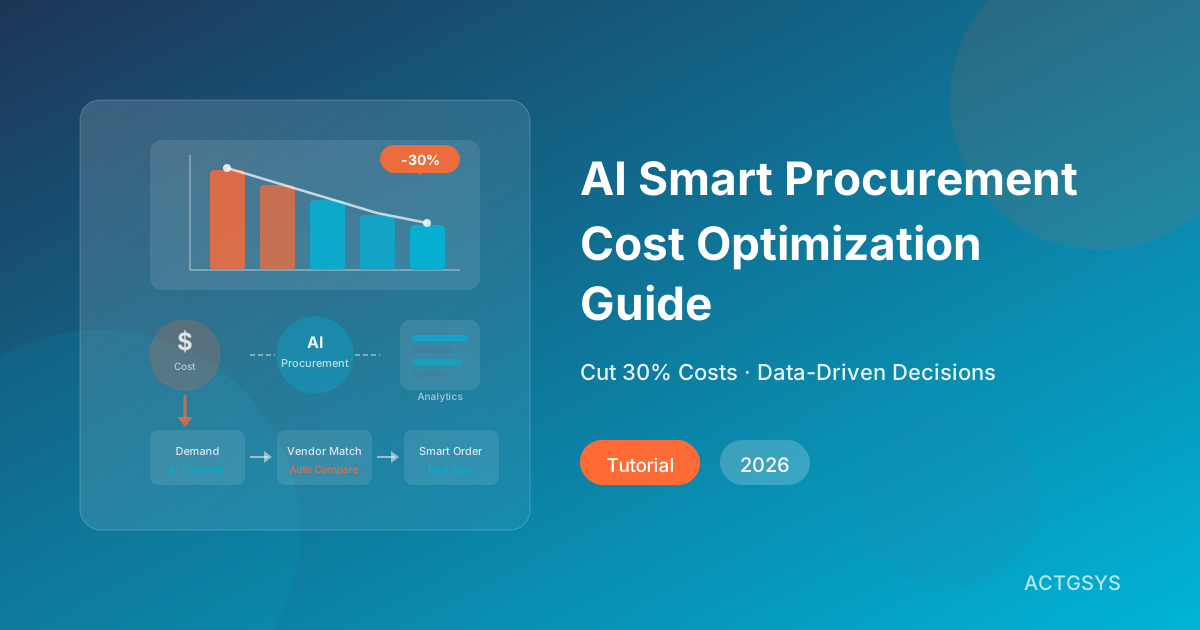
AI Smart Procurement & Cost Optimization Guide
Learn how AI is transforming procurement for small and mid-sized businesses — from supplier evaluation to price prediction, with ROI models, implementation steps, and Dinkoko ERP integration.
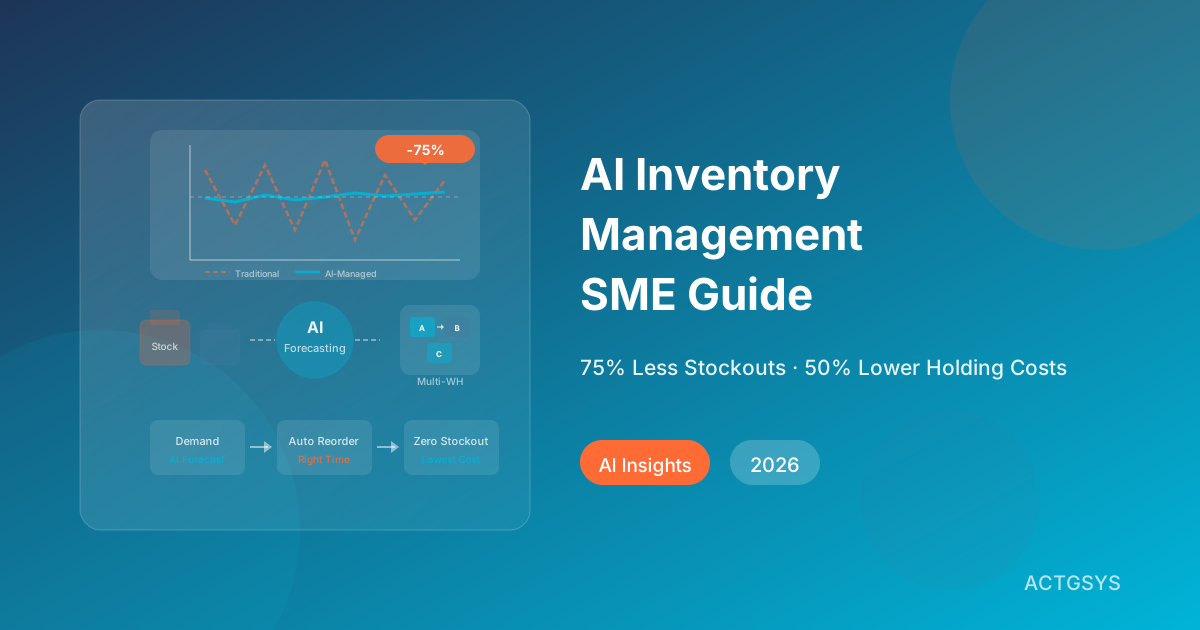
AI Inventory Management: Cut Stockouts 75% (2026)
A comprehensive guide on how AI-powered inventory management helps SMEs predict demand, automate reorder points, cut holding costs by 20-50%, with traditional vs AI comparison, multi-warehouse strategies, and Dinkoko ERP integration.
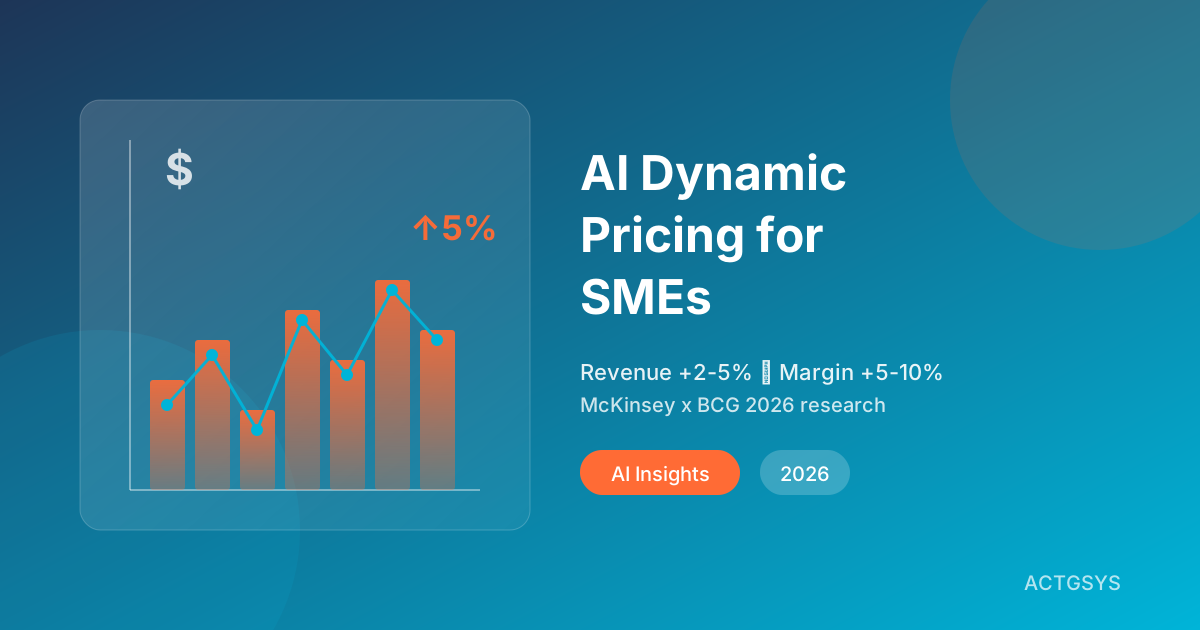
AI Dynamic Pricing for SMEs: Real-Time Revenue 2026
AI dynamic pricing uses machine learning to adjust prices in real time to maximize revenue and margin — McKinsey and BCG (2026) research shows 2–5% revenue growth and 5–10% margin improvement for adopters, but fewer than 15% of retailers have deployed it.
What would this cost you?
Answer five questions. Within three working days you get a price range and what it covers. No deck, no follow-up sales calls.
Prefer to talk?LINE·02-2553-8084