Complete SME AI Digital Transformation Guide
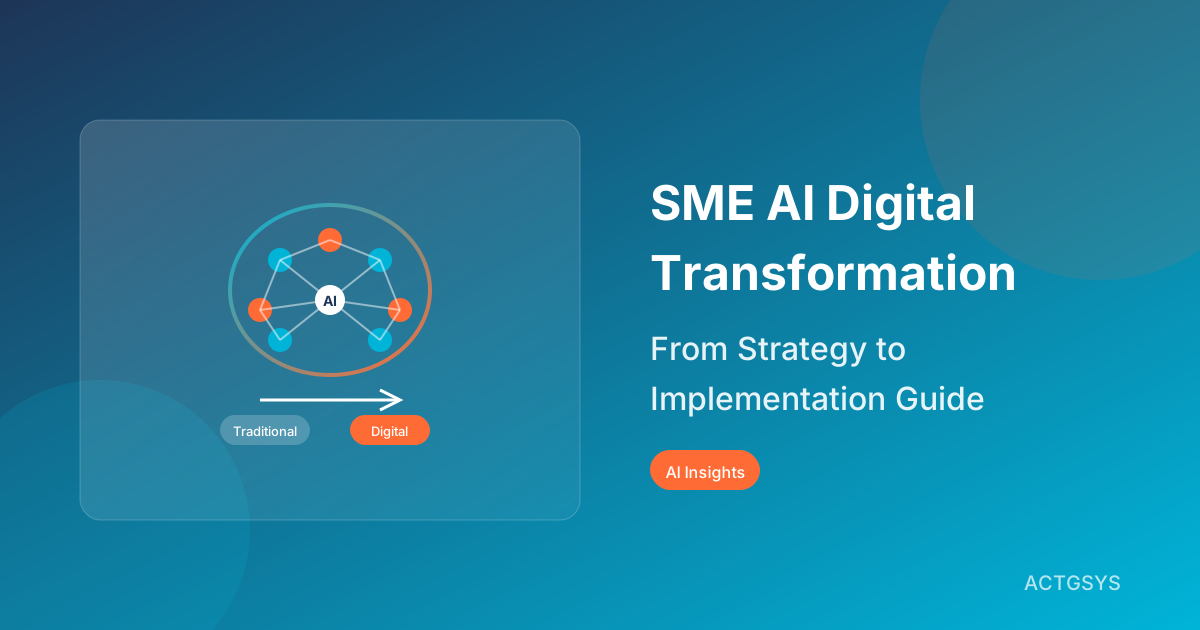
In 2025, AI is no longer exclusive to large enterprises. More and more small and medium-sized businesses are recognizing that AI can bring significant efficiency improvements and competitive advantages to their operations. However, how to correctly implement AI while avoiding common pitfalls is a challenge every business owner must face.
Why Should SMEs Pay Attention to AI?
According to the latest research, SMEs that adopt AI technology show an average revenue growth rate 25% higher than those that haven't. This isn't just a technology trend—it's a survival necessity.
Core Value AI Delivers
- Efficiency Improvement: Automate repetitive work so employees can focus on high-value tasks
- Decision Optimization: Data-driven insights reduce risks of intuition-based decisions
- Customer Experience: 24/7 intelligent customer service improves customer satisfaction
- Cost Control: Optimize resource allocation and reduce operational costs
Five Common Myths About SME AI Adoption
Myth 1: AI Implementation Costs Too Much
In reality, modern AI solutions offer many SaaS models. SMEs can start small and scale gradually. Initial investment might only be a few thousand dollars, yet deliver tens of thousands in benefits.
Myth 2: Requires Professional IT Team
Many modern AI tools have achieved "no-code" or "low-code" capabilities. Businesses don't need to hire professional engineers to use them. Of course, for more complex needs, you can seek professional partner assistance.
Myth 3: AI Will Replace All Employees
AI's purpose is to assist, not replace. It handles repetitive work, allowing employees to exercise greater creativity and professional judgment.
Myth 4: My Industry Doesn't Need AI
From quality inspection in manufacturing, inventory management in retail, to customer relationship maintenance in services—AI has applications across all industries.
Myth 5: Wait Until Technology Is More Mature
The cost of waiting is competitors getting ahead. Current AI technology is already mature enough, and early adopters are already enjoying the benefits.
Practical Implementation Path
Phase 1: Assessment and Planning (1-2 weeks)
- Inventory pain points in current business processes
- Identify high-repetition, high-error-rate work segments
- Evaluate current data infrastructure
- Set clear KPI targets
Phase 2: Proof of Concept (2-4 weeks)
- Select a small-scale application scenario
- Quickly build a proof of concept (POC)
- Measure actual benefits
- Collect user feedback
Phase 3: Formal Deployment (4-8 weeks)
- Adjust solution based on POC results
- Perform system integration
- Employee training and change management
- Establish monitoring mechanisms
Phase 4: Optimization and Expansion (Ongoing)
- Continuously optimize models based on data
- Expand to other business areas
- Establish AI governance framework
Key Considerations for Choosing AI Solutions
Technical Aspects
- Integration Capability: Can it seamlessly integrate with existing systems?
- Scalability: Does it support business growth?
- Security: Data protection and compliance
Business Aspects
- ROI: Expected benefit-to-cost ratio
- Implementation Time: Cycle from contract to go-live
- Technical Support: Vendor service quality
Strategic Aspects
- Long-term Planning: Does it align with long-term business direction?
- Vendor Stability: Partner's market position
Conclusion
AI digital transformation is not a one-time project but a continuous evolution journey. The key to success lies in choosing the right starting point, establishing clear goals, and partnering with reliable technology partners.
If you're considering implementing AI solutions for your enterprise, ACTGSYS provides one-stop services from consulting, planning, to deployment, helping SMEs achieve digital transformation through the optimal path.
Products & Solutions in This Article
Related Articles
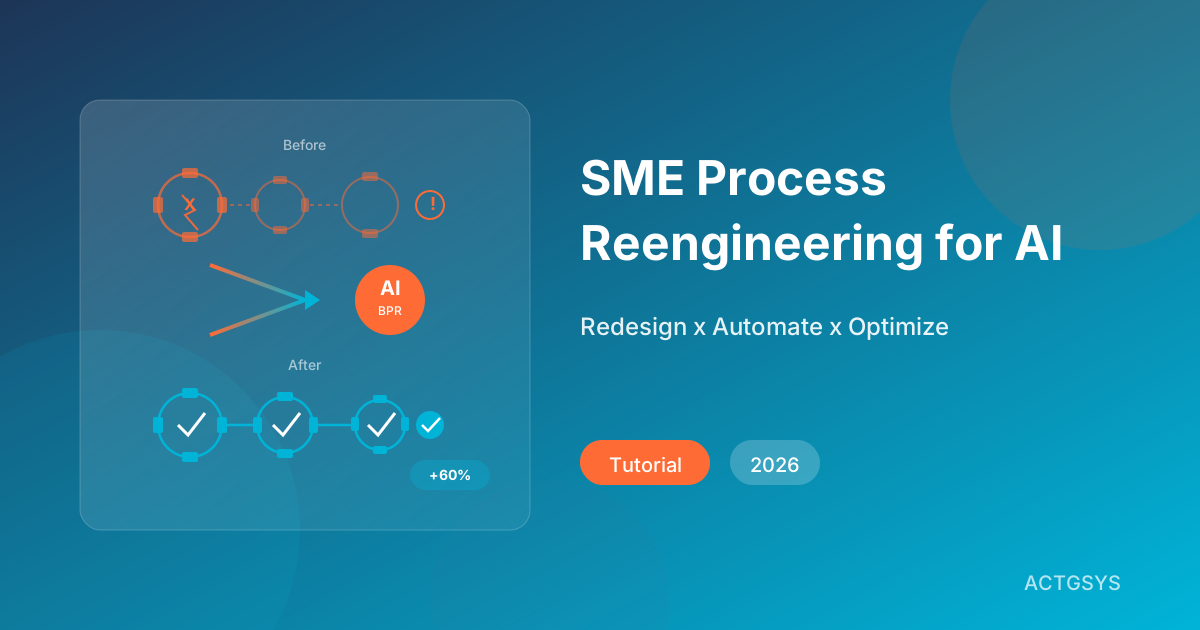
SME Process Reengineering for AI Automation (2026)
Why do most AI automation projects fail? This guide reveals that Business Process Reengineering (BPR) is the key to success, with a complete framework for SMEs.
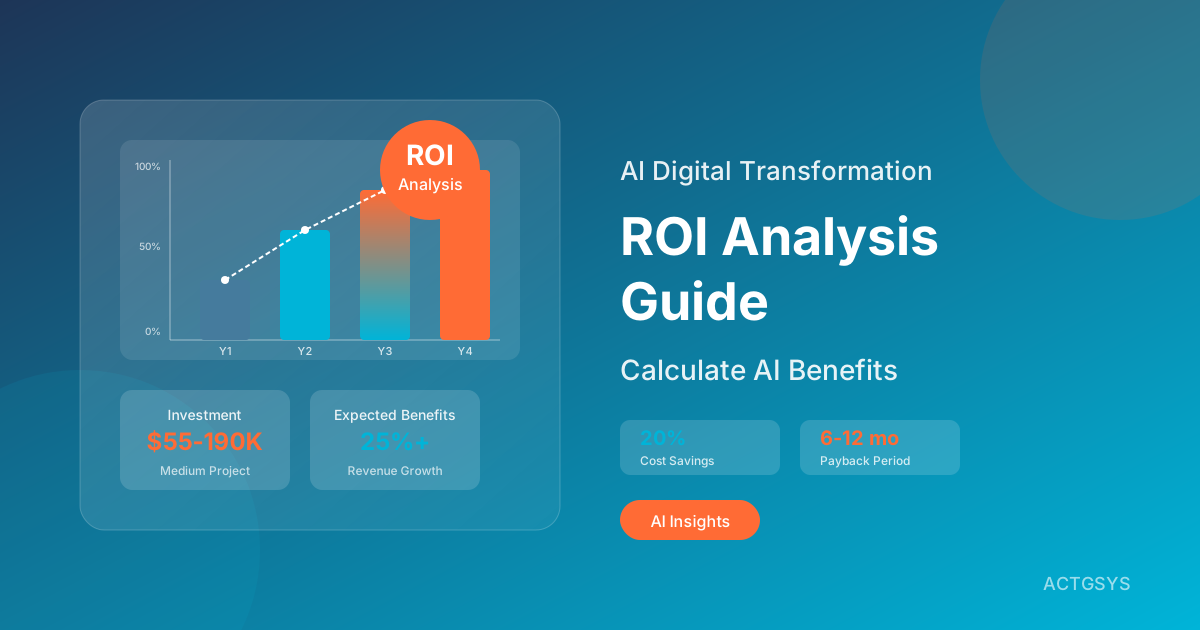
AI Digital Transformation ROI for SMEs (2025)
In-depth analysis of AI digital transformation's true costs and benefits, providing ROI calculation formulas and real cases. Learn how to avoid AI project failure, plan phased implementation strategies, ensuring maximum investment returns.
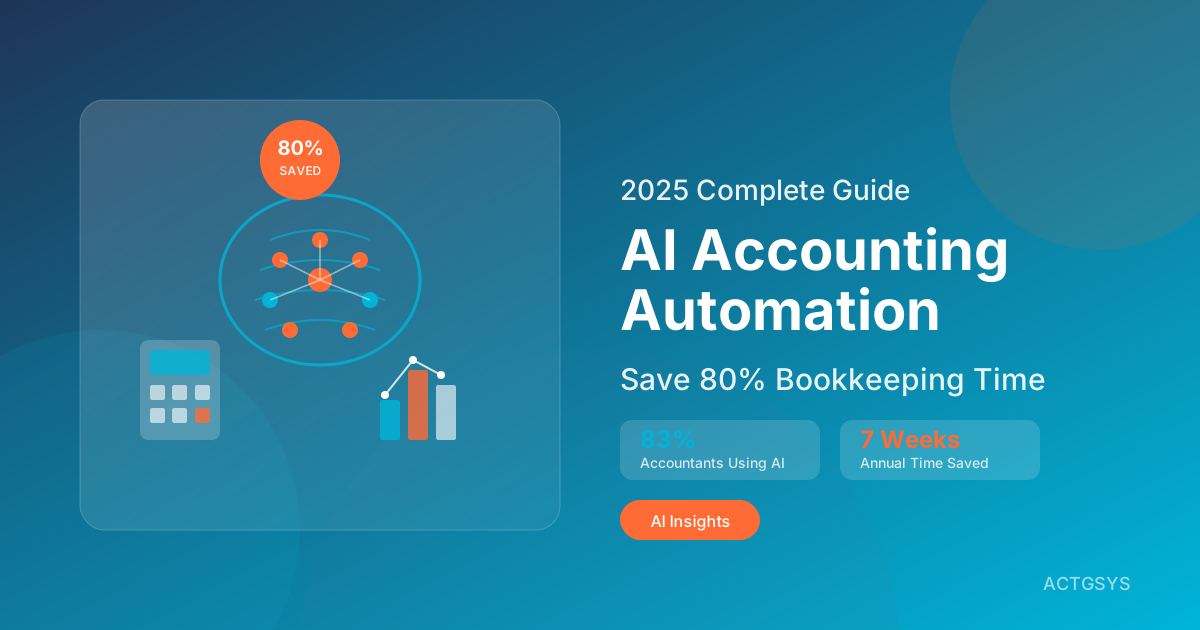
AI Accounting Automation 2025: Save 80% of Time
In-depth analysis of AI accounting automation trends. Discover how 83% of accountants leverage AI tools to boost efficiency. Complete coverage of automated bookkeeping, invoice processing, financial analysis, and more to help you choose the best AI accounting solution.
What would this cost you?
Answer five questions. Within three working days you get a price range and what it covers. No deck, no follow-up sales calls.
Prefer to talk?LINE·02-2553-8084